


Menu
By theme
By theme



{{ variable.name }} : {{ variable.values[selectedVariantsIndex[variable_index]].name }}
Quantity:
Gesang flower doesn't correspond to a single species in botany. It is the Tibetan term for wildflowers of the plateau in general, and what it points to varies from place to place; one common identification is Potentilla fruticosa, another is cosmos. So the gesang flower in jewellery takes the idea rather than a botanical study, and that is worth saying at the outset. Potentilla is a shrub of the rose family with small five-petalled flowers that opens in sheets across the high ground; cosmos reached Tibet much later.
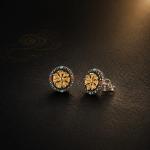
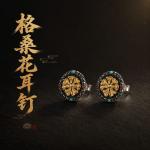
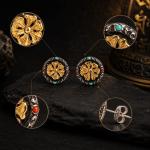
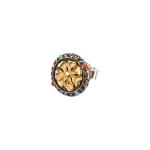
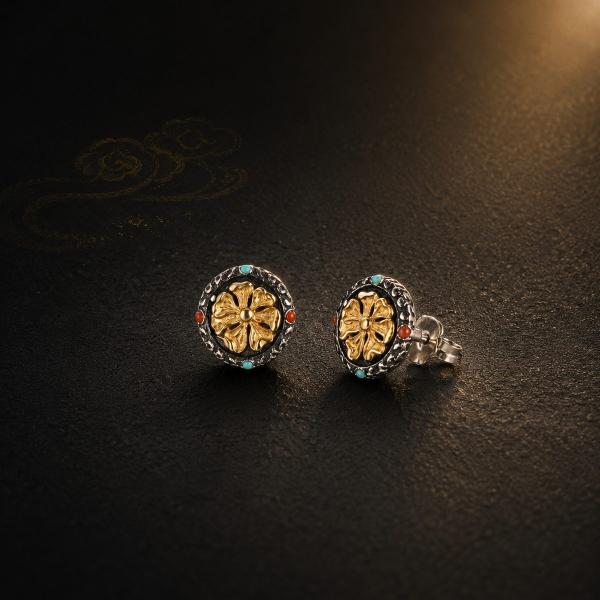
Studs of this flower are made with five petals or eight, the centre drawn to a single point and each petal given a slight curve. The silver is matte-finished with the petal edges left bright, and the contrast between polished and matte is what makes the flower read. Matte surfaces polish up with repeated wiping and never go back to the original flatness, so clean the edges only and keep the cloth off the petals. Eight petals set out in exact equal division look stiff, and the better solution lets each one vary slightly in size.
Tibetan work differs from Chinese: the lines are heavier, the planes more unified, the detail less picked over. This pair follows that. The curve of each petal is one solid form with no veins cut in, and the silhouette does the talking. At small scale the approach pays off — the shape is clear from a distance and doesn't let you down close up. If the boundary between matte and bright is muddled the flower falls apart, because that line is the skeleton of the piece.
Studs are less trouble than drops: they don't catch hair and a mask strap won't hook them. Watch the posts — S925 posts are on the soft side, so don't force them; if one bends, straighten it gently with pliers, with a cloth between the jaws rather than biting metal on metal. Silicone backs are more comfortable than metal ones and grip better. The post needs enough length: too short and it won't hold, too long and it presses on the skin behind the ear, which you notice as soon as you try it.
Silver oxidises, and studs sit against the scalp and behind the ear where sweat gathers, so they darken quickly. A wipe after each wearing saves a session of cleaning later. They are small and unobtrusive for daily wear, fine with a Tibetan-style robe or a plain shirt; for more presence, stack them across two piercings, one large and one small, offset from each other. Left unworn for a long time, the posts develop a layer of black, so clean them before they go back in. Worn as a pair, keep the matte face outward and the bright face inward.