


Menu
By theme
By theme





{{ variable.name }} : {{ variable.values[selectedVariantsIndex[variable_index]].name }}
Quantity:
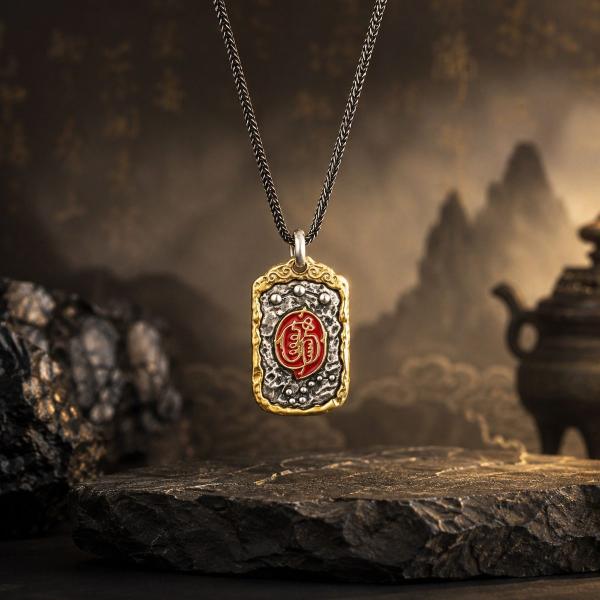
The Golden Light hui glyph is the Golden Light Mantra condensed, the whole text pressed into one coiled symbol. It ranks fairly high in talismanic practice, and talisman writers often lay it down first, holding that once this glyph stands, the strokes that follow will stand with it. The idea circulates inside Daoist circles and sounds esoteric from outside, though in the hand it amounts to turning 'settle the mind first' into a sign. The mantra's use was once quite practical: going out, walking at night, heading into the hills, you said it once, let the mind steady, and then set off.
Two-tone work means putting two colours on one silver piece. There are two usual routes: partial gold plating, so the lettering goes yellow against a white ground, or partial darkening, so the recesses go black and the high ground stays bright. The first gives strong contrast, the second more depth. Either adds several steps, and every added layer pushes the reject rate up a little. A gold layer is measured in microns, invisible and impalpable, and only time will vouch for it.
Durability is where two-tone work tells the truth. Plating always wears fastest on the high points, rubbed daily by cuffs and collars, and a difference in colour shows within a few months. Darkened finishes are steadier: wear thins them rather than exposing a patch of bare metal. Before buying, decide whether you want short-term brilliance or long-term composure. The boundary between the two tones is the hardest part to finish, and a line that does not run true is visible at a glance.
The pendant is narrow and tall, with the glyph set vertically in a single line from top to bottom. The bail sits at the top and the hole is small, which suits a fine chain; a thick cord makes it look top-light. The back is flat and does not dig into the skin, though some pieces carry a shallow relief on the reverse as well, which is another approach and gives you something to look at when it is turned around. A narrow plaque hangs at the middle of the collarbone, and a lower neckline is needed to show it.
Two-tone pieces should not be rubbed hard with a silver cloth, because the polishing powder carries the dark finish away bit by bit until the two tones merge. Nor should they be dipped in silver solution, which does not distinguish between finishes and attacks both. If it is dirty, rinse in clean water, press dry with a soft cloth, leave it in the air for a while, then put it away. Keep two-tone pieces separate: stacked against other silver, the same spot takes the wear.