


Menu
By theme
By theme











{{ variable.name }} : {{ variable.values[selectedVariantsIndex[variable_index]].name }}
Quantity:
The yin-yang taiji diagram everyone knows took shape surprisingly late. Zhou Dunyi's Explanation of the Taiji Diagram in the Song dynasty describes a different figure, circles set inside circles; the paired fish, each holding a dot of the other colour, only came into general use around the Ming and after. So an old painting showing a taiji that does not look like the modern one is no cause for surprise. The change had to do with printing: the simpler the line, the less a woodblock smudges. Two-fish diagrams appear in Ming books and are commoner still in the Qing.
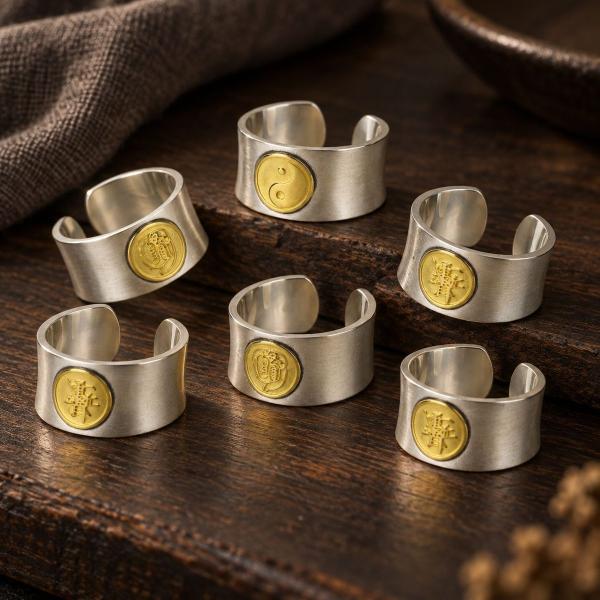
Reading the fish is not complicated: a black dot in the white fish, a white dot in the black, saying that yin contains yang and yang contains yin and nothing is pure. The two fish take each other's tail, and their turning stands for waxing and waning, which covers the four seasons and the hours of a day. The beauty of the figure is that it moves rather than sitting as a static division. The eyes are set slightly off centre, which is what gives the turning its sense of flow.
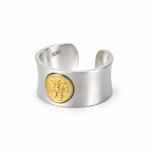
A wide open ring touches far more skin than a narrow one, so the same size feels tight. The opening allows adjustment, but only so much: a millimetre or two is fine, while asking it to cross two sizes is asking too much of silver. Make one adjustment and leave it. The men's version is a size 20 and the women's an 18 on the Chinese scale, which covers most wearers, and the opening takes up the rest. Turn the gap to the inside of the hand rather than the side of the finger, so it does not press when you grip something.
Of the three motifs, taiji is the most universal and suits anyone; the Ziwei and Golden Light glyphs sit closer to Daoist practice, and those who know them will recognise them at once. A wide band has the most presence on the index finger, while on the ring finger it can look clumsy, though that depends on the size of the hand and needs trying. All three are cut on the same band, and the one carrying more characters looks heavier, which is worth weighing when you choose.
A wide face meets a table edge more often than a narrow one, and the rim suffers first. Dust gathers in the recesses of the glyphs: use a toothbrush with a little clean water and brush along the strokes rather than across them. Oxidation shows plainly on a broad surface, yellowing in patches, so wipe the whole face evenly; working at one spot only leaves it more mottled than before. Under lamplight a wide silver face throws back a sheet of reflection, and the brighter the polish, the more it records fingerprints.