


Menu
By theme
By theme




{{ variable.name }} : {{ variable.values[selectedVariantsIndex[variable_index]].name }}
Quantity:
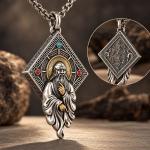
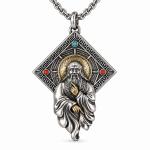
The image of Laozi follows a formula: white hair, white beard, a high forehead, a Daoist robe, and either a scroll in his hand or nothing at all. The best-known version has him on a green ox: outside the Hangu Pass the gatekeeper Yin Xi saw purple vapour coming from the east, stopped him and asked for a book, and that is how the five thousand words came down to us. Daoism venerates him as Tai Shang Lao Jun, a divine figure far more complicated than the philosopher. Where he went after the pass the histories do not say, though legend has plenty.
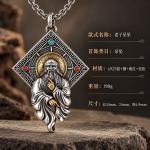
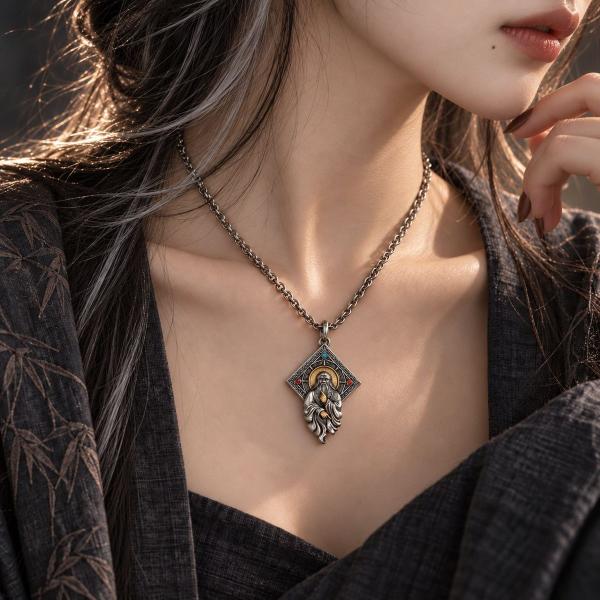
The meander is a continuous geometric band derived from the thunder pattern, found all over Shang and Zhou bronzes: one stroke turning back on itself, running to the corner and folding back again. Later ages read it as having no end, and hung wishes on it for unbroken wealth and unbroken descendants. A diamond cartouche frames a motif in a tilted square and leaves the middle clear for the principal figure. Meander bands run in one direction or the other, and mixing the two throws the whole field into confusion, so the old carvers fixed the direction before starting.
With a portrait and a meander on one plaque, the hierarchy has to be clear. The figure sits in the middle inside the diamond, and the meander fills only the four corners; fill more and it steals the scene. The silver line should run in one pass, and a meander suffers most from breaks: one gap and the ring comes apart like a dropped stitch in knitting, more obvious the longer you look. The corners of the diamond need room, since a sharp corner pinches the figure's arm. The density of the meander should follow the plaque, tighter at the corners and looser towards the middle, so the eye is not tired.
Carving an old man in silver, the beard and the fingers are the difficulty. Beard lines are fine and lie one over another: cut deep and they go black, cut shallow and they vanish. The fingers are smaller still, five together, hinted only by the rise of the knuckles. Get those two passages right and the portrait stands; get them wrong and it is an old man in a robe. Laozi's expression is usually level, neither smiling nor angry, which is not the benevolent look of a Buddha. Blur either passage and the piece is wasted.
A subject with this much bookish weight suits an older wearer better than a young one; the older generation recognises the figure and the weight of the name. A silver plaque dislikes knocks, and the meander at the corners suffers first. Wrap it in a soft cloth when it is off, and do not pile it with other jewellery. For older wearers silver is about remembrance, and sheer presence comes second.