


Menu
By theme
By theme

{{ variable.name }} : {{ variable.values[selectedVariantsIndex[variable_index]].name }}
Quantity:
The place of the lotus in Buddhism needs little explaining: buddhas and bodhisattvas mostly sit on lotus thrones, and the flower rises from mud unstained, so it stands for purity. Before that meaning, India itself treated the lotus as a sign of fertility and good fortune; the flowers by the Ganges open early and fold again after noon, as though keeping their own hours. The two layers of meaning together explain how far the motif travelled. The number of petals on an image is not arbitrary either, eight and sixteen being common, each with its own reading. Lotus season is summer and the bloom is brief, which gave the flower a further sense of something rare.
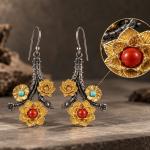
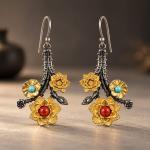
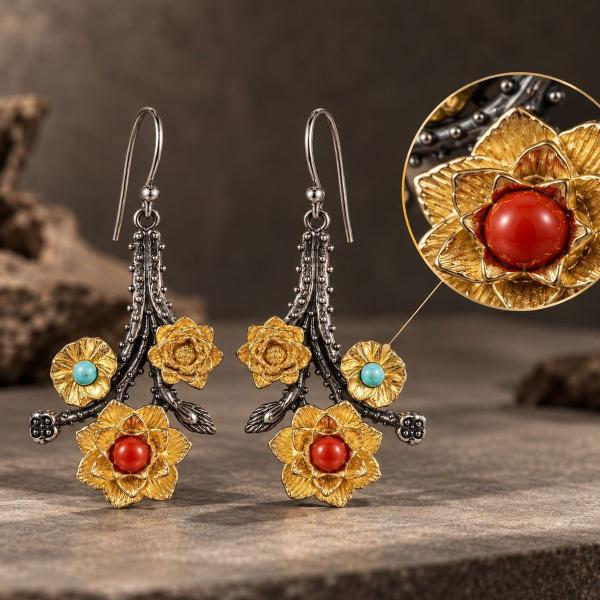
Vintage is a word that separates good work from bad by a wide margin. Done badly, everything is darkened to look as though it had been dug out of the ground. Done well, the edges are given weight, the heart of the flower drawn in, and the colour dropped one step so that it looks old without looking dirty. This pair takes the second road and ages cleanly. The finish also has to be carried round the back: antiques on the front and a fresh surface behind gives the trick away the moment it is turned over.
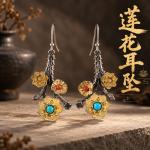
There are two versions, one in plain silver and one with nanhong agate. Plain silver is cool and shows best against dark clothing; nanhong red is muted and does not shout, and it comes forward against middle tones such as oatmeal and grey-blue. Which one you choose has more to do with your wardrobe than your taste: buy the one with nothing to wear it with and it goes into a drawer after two outings. The agate beads vary in size, and on a drop they should not crowd; too many and the red becomes a single blot.
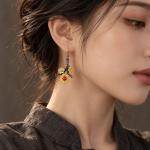
The weight of a drop rests on the lobe, and the petals lie in layers: thin keeps it light but deforms, thick is stable but drags. Silver is ductile enough for the petal edges to be pressed very thin, thin enough to let light through, which is the loveliest and most fragile part of the piece, so keep your fingers off the tips when putting them on and taking them off. The curve of the hook should follow the ear: too open and it slips out, too closed and it pinches, and only trying will tell. The backs of the petals deserve work too; a flat plate on the reverse is a waste.
Silver oxidises, and the recesses between petals darken first; that is the natural depth of the piece and need not be polished back. The nanhong version should not be soaked: water that gets between stone and setting dries to a white ring. Hang the earrings on a stand when you take them off rather than crumpling them into a bag. The two should weigh the same, because a pair that is light on one side makes you feel, after a while, that you are walking crooked. Keep them together.