


Menu
By theme
By theme

{{ variable.name }} : {{ variable.values[selectedVariantsIndex[variable_index]].name }}
Quantity:
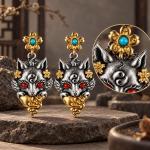
Turquoise covers a wide range of colour, from sky blue to apple green: more copper pushes it blue, more iron pushes it green. Natural stone is seldom even, and usually carries brown or black veining, called iron line in the trade. Some buyers look specifically for the iron line, feeling that it is what the stone actually looks like; others will only accept a clean face. A matter of taste. Cut from the same batch, the colour still will not match exactly, and that is the clearest difference between turquoise and glass or a synthetic. The iron line is not a crack. It is mineral that grew inside the stone, and it feels flat under the finger.
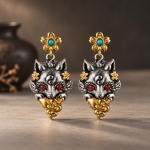
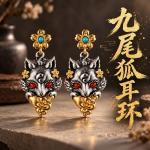
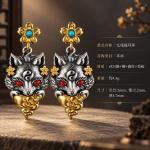
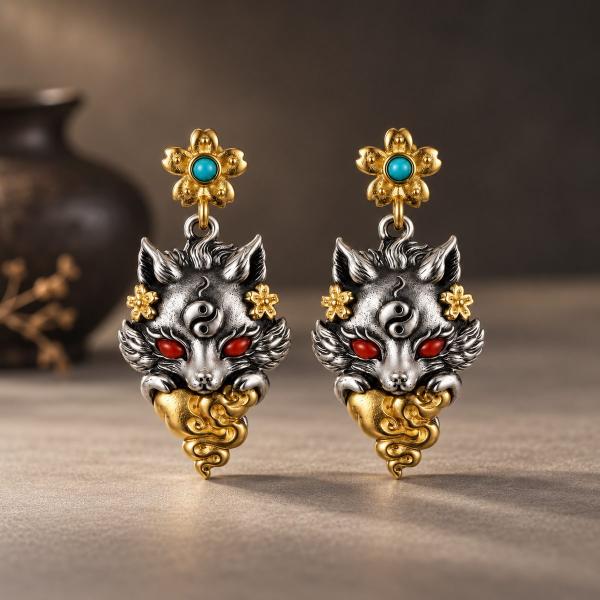
The fox on these earrings is made lean. The body is turned sideways, the head looking back, and the nine tails spread along the lower edge of the drop in distinguishable strands. The tails are where this piece is most likely to go wrong: the tips are fine, they tend to come short in casting, and they catch in hair when worn. The nine run side by side with gaps left between them, and the gaps have to be even — uneven, they look like a tassel that has not been combed straight. The distance from lobe to jaw is short, so the tails cannot be long; long, they hit the face.
Colour is the difficult part here. The turquoise's green is cool and the silver's white is cool as well, and two cool tones set against each other can go dead, so a ring of bright silver is left at the edge of the setting to separate them. The eye is not set with stone; it is a raised point of silver that catches the light, and the whole fox's expression rests on it. The bright line is only half a millimetre wide, and polishing it means working with a light touch.
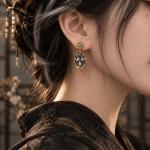
The weight of the earring sits low, so it swings slowly rather than flapping about like a weightless sheet. The curve of the hook should follow behind the ear; bent too wide it will not stay on. On thin lobes a long wearing begins to drag, and a pair of slim silicone backs will hold it. If the two earrings differ slightly in weight, you notice it after a few hours.
Turquoise is a porous stone. It dislikes sweat, perfume and detergent; what lands on it soaks in, and once the colour darkens it does not come back. Put the earrings on after make-up and perfume, and take them off before a shower or a swim. The silver takes a silver cloth, with the cloth working around the stone rather than across it, so no oil is carried onto the face. Do not scrub the stone with a toothbrush; the bristles push dirt deeper into the iron lines.