


Menu
By theme
By theme





{{ variable.name }} : {{ variable.values[selectedVariantsIndex[variable_index]].name }}
Quantity:
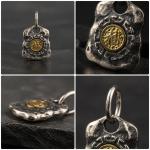
Hammering is done point by point with a small hammer: the dents are close together and of varying depth, and no two are quite the same. A machine-pressed texture is regular, squared off in even rows, and after a while it looks dead; hand-hammering carries the weight of the blows, so light breaks into a scatter of small highlights instead of one flat reflection. The difference hardly shows in a photograph. Take the piece in your hand and look at it sideways and you see it at once. Worked for a while, the silver hardens and has to be annealed once, or it will crack. Hammer faces are round or flat, and the dents come out deep or shallow accordingly. The spacing has to be even: dense areas read bright, sparse areas dark.
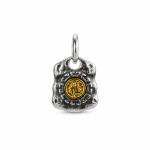
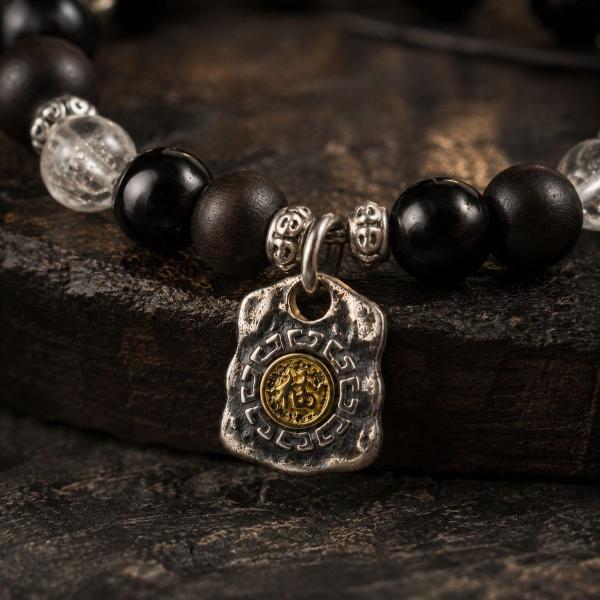
The fu character sits on top of the hammering. It rises out of the textured surface, its stroke edges broken by hammer marks, not as tidy as a machine engraving — more like lettering worn into old silver. Folk custom says the fu should be hung upside down, a pun on fu arriving; on a charm the convention does not apply, and the character reading the right way up is what looks comfortable. It has many strokes, horizontals thin and verticals thick, and the stroke most likely to come short in casting is the left-falling one. The last stroke runs long, out to the edge, and lands with control.
It is a component, not a finished piece. It can go into a bracelet beside the main beads, or hang alone as a small pendant, or be braided into a car charm or a bag charm. The hole sits high, so the character hangs upright; threaded among beads it turns with them, and whichever way it faces is fine. One of these in a strand is enough; more and it steals the scene. The hole edge is chamfered so the cord does not chafe. On a bag, pair it with a length of leather cord in a deeper colour.
In size it is middling: with eight to ten millimetre beads it does not look out of place, and with larger beads it looks small. Silver's white is bright; dark wooden beads or coconut shell are safest, and turquoise or South Red agate will lift it too. Keep to three colours at most — beyond that it gets busy. Silver white goes best with dark wood: one bright, one muted.
Dust collects in the dents. A few dry strokes with a soft brush lift it out; do not pick at it with a pin. When the silver blackens, press a silver cloth over it and leave the dark in the hammer marks, which is what keeps the texture three-dimensional; polished too bright, the hammering goes flat. After polishing, hold it to the window and touch up anywhere the brightness is uneven.