


Menu
By theme
By theme

{{ variable.name }} : {{ variable.values[selectedVariantsIndex[variable_index]].name }}
Quantity:
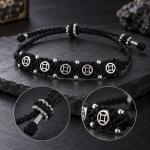
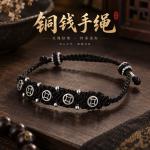
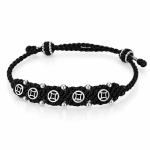
Braiding coins into cord is an old custom. Strings of five-emperor coins hung behind doors, laid under pillows, braided into wrist cords for children — it is done everywhere, and the idea is that coinage connects and holds. The round coin is heaven, the square hole earth; the saying goes back to the round coins of the Han, though whoever braids the cord may not be thinking that far, only wanting things to run smoothly. The five emperors are Shunzhi, Kangxi, Yongzheng, Qianlong and Jiaqing; folk belief holds that the five reigns ran consecutively, so the energy runs smoothly through them. Red cord is common because red holds things down in folk custom — it is not a rule. Both colours resist dirt, and sweat stains do not show on a dark cord.
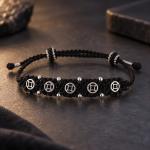
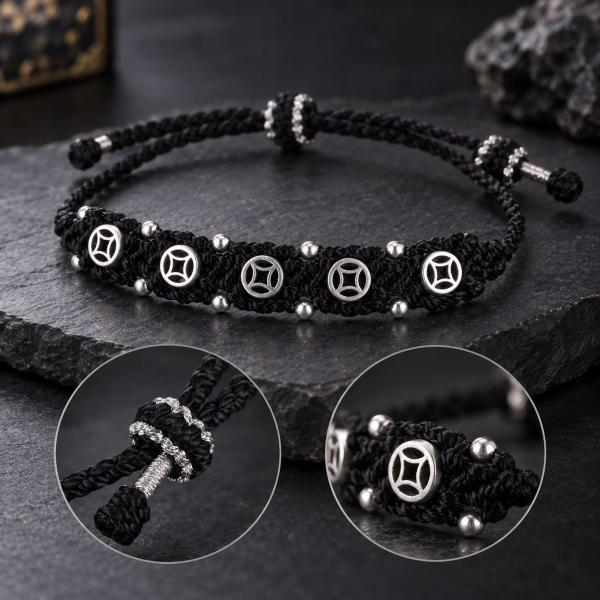
The "coins" here are made of silver — not old cash, and not circulating coin either. Silver sheet is pressed into the coin shape, round outside and square inside, the characters and patterns following the mould, deep here and shallow there, nothing like the cuts on a real coin. Better to say this clearly at the outset, in case someone takes it for an antique. The pressed piece is thin and the cuts shallow; it feels flat. The edge of the square hole is chamfered so the cord passing through does not wear through.
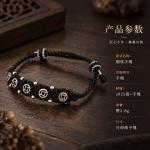
The braid uses stranded cord, in knots no more exotic than the flat knot and the vajra knot, worked along section by section and pulled tight — tight is what makes the cord stand up. Leave a little play between cord and coin: braided solid, the coin cannot turn and presses into the wrist. Two colourways, grey-blue and black; grey-blue is cooler, black is steadiest, and neither is fussy about clothing. Braiding methods differ from place to place and the knots have a tangle of names; what matters is that it looks right. The grey-blue one looks best with a white shirt.
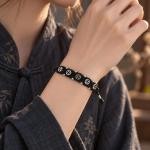
The fit is adjusted at the knot at the tail end. Leave a finger's width of room: too tight and it leaves a mark, too loose and it turns to the inside of the wrist. The cord stiffens when wet — shake it dry after washing your hands and do not leave it soaking; cotton left in water too long starts to smell. Leave a short tail and singe the end to seal it, or it will unravel. Worn long, the bracelet rotates around the wrist, and the characters facing inward is normal. Keep the knot small so it sits against the inner wrist without pressing.
The silver coin oxidises; when it dulls, press it with a silver cloth and leave the black in the cuts. If the cord gets dirty, brush it lightly with an old toothbrush and soapy water, rinse, and dry in the shade — do not put it in the sun, which fades the colour. The place where silver meets cord blackens first, because that is where sweat collects.