


Menu
By theme
By theme

{{ variable.name }} : {{ variable.values[selectedVariantsIndex[variable_index]].name }}
Quantity:
Dzogchen, in Tibetan Buddhism, refers to a body of teaching in the Nyingma school, known in Tibetan as dzogchen, concerned with the nature of mind. It is a matter of practice. It is not a deity and not a symbol, and when manufacturers cast it into a pendant they are taking the auspicious sense of the Chinese words yuanman, completeness, which is not the same thing as the teaching. This is worth saying plainly. Otherwise buyers think they have come away with an amulet, and sellers start adding flourishes of their own, and both ends of the transaction end up hollow.
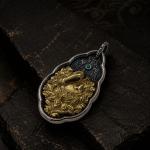
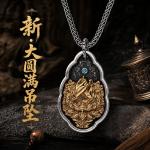
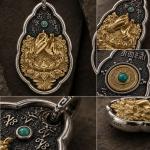
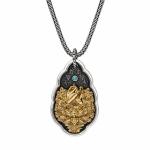
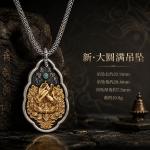
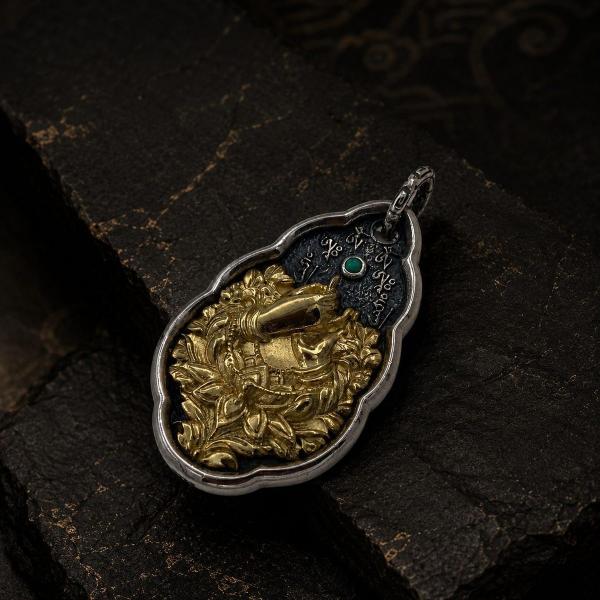
The Buddha hand in sculpture is a carrier of mudras. The gestures of fearlessness, of granting wishes, of touching the earth, of teaching — each belongs to an occasion, and the bending of the fingers follows set forms. This piece puts a hand and a lotus together, as though the hand supports a flower without effort, the knuckles gathered rather than gripping. The Buddha hand has another meaning in folk usage: finger citron is offered at altars for its scent and for the word fo, Buddha, in its name. That is not the hand of a bodhisattva, but both are called fo shou, and the two get mixed up constantly.
The curve of the fingers is the hardest part. Five fingers held together look prim; spread too wide they scatter. A few degrees difference at a knuckle changes the character entirely. Silver's reflection magnifies every turn. Polished too bright, the pads of the fingers look like plastic; left slightly matte, the structure of the bone comes through. The nails should be kept thin — thick, and the hand becomes a small shovel. The gaps between the fingers need to be open. Solid fingers pressed together look like a biscuit.
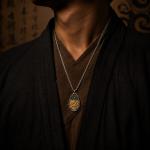
A three-dimensional pendant catches threads. Cashmere, silk, knits — any fabric with a lofted surface will be caught by the gaps between the fingers, and a tug as you walk flips the pendant over. Pair it with a plain chain of about a millimetre, finishing at the chest, and avoid chains with dangling elements of their own. With knitwear, tuck it inside the collar and treat it as something worn close to the body. It sits more securely that way, and the outline doesn't show through the wool.
Don't rush to deal with blackening in the hollows. Between the fingers and on the shadow side of the petals, oxidation arrives first, and even darkening is a good thing, because it gives the lines something to stand against. Dry-brush with a soft brush, and if it won't come away, leave it. If you must wash the piece, use warm water with a little neutral soap, swill the pendant a few times and take it out; don't soak it. Silver hates being stored damp. Into the bag without drying, and the next time you open it there is a white bloom across the surface. Patina comes from wearing. Wiped too often, it never settles.