


Menu
By theme
By theme








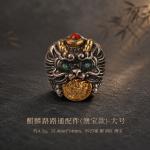


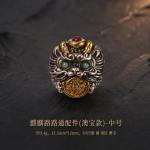
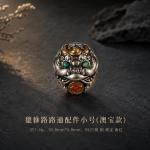
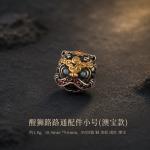

{{ variable.name }} : {{ variable.values[selectedVariantsIndex[variable_index]].name }}
Quantity:
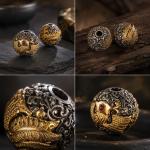
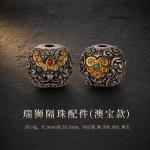
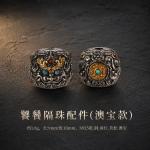
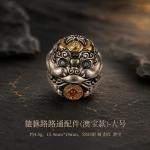
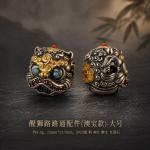
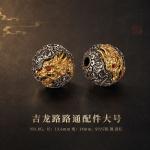
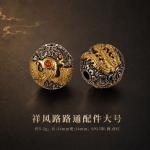
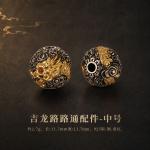
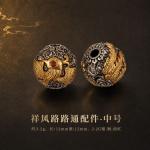
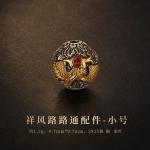
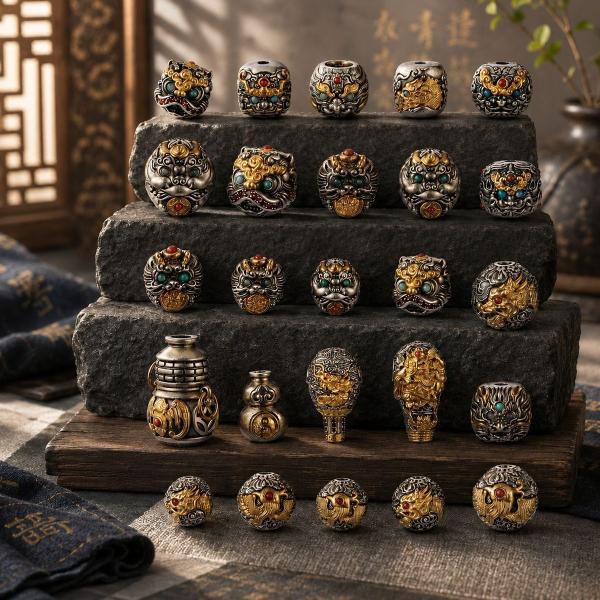
This group isn't a piece of jewellery. They are parts for a bead bracelet. The barrel bead goes in the middle of the main strand and turns; the three-hole bead handles the change of direction, its three holes set in a T; spacers break a long strand into sections and set the rhythm. Before buying, measure the hole size of your strand and the thickness of the cord. Too small a hole and the piece won't go on; too large and it rattles on the cord and wears it through. The inside of a silver hole should be rounded over, because a square hole with straight walls puts all the load on the corner, and that is where the cord breaks first.
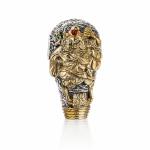
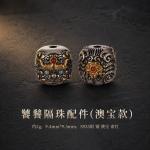
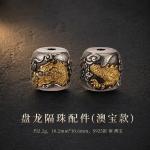
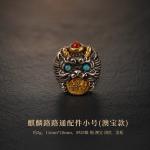
Of the six designs, the lion dance comes from Lingnan. The southern lion has a high forehead, big eyes and a single horn on its head, and its dance is about plucking the greens — a different temperament from the stolid northern lion. The pixiu is an auspicious beast that folk tradition says takes in and never lets out, which makes it popular with people in business. Guan Yu moved from being a figure of the Three Kingdoms to an object of folk worship: red face, long beard, one hand smoothing the beard and one resting on the blade. The auspicious dragon and the coiled dragon are two separate lines, one ceremonial and one coiling, and wrapping a dragon's body around a bead takes more labour.
The opal versions are the pieces set with Australian opal. What you look at in opal is play of colour: turn it, and the reds, blues and greens in the ground shift position, and no two stones flash the same way. Its hardness is only five and a half to six and a half, lower than quartz, so it dislikes knocks and it dislikes dryness; kept too long in a dry box it develops fine cracks. Set as an eye or a small panel on a component, it needs keeping away from hard objects in daily wear. Don't let it knock against a watch.
The phrase about coming out of wax needs explaining. A casting straight from lost-wax moulding is called a wax piece; coming out of wax means the state in which it has just left the mould and hasn't been cleaned up — rough surface, sprue still attached, burrs on the edges, needing filing by the buyer or finishing by a smith. People who buy this version usually do the work themselves and save a stage of labour. The silver in a raw casting is soft, so a file cuts easily, but it is also easy to file too far, and a hollowed corner cannot be put back.
There is a simple sense of proportion in putting these together: one three-hole bead per strand, two or three spacers at most. More, and the strand falls apart visually. Don't mix subjects too widely either. A wealth deity and a charnel-ground lord on the same strand, one asking for abundance and the other speaking of impermanence, pull in opposite directions and end up merely busy. Silver components are heavier than wooden beads, so spread them out; all crowded to one side and the strand rotates on the wrist, and rotation loosens the cord. Once the silver is in position, stop moving it. The cord will wear the hole oval.