


Menu
By theme
By theme







{{ variable.name }} : {{ variable.values[selectedVariantsIndex[variable_index]].name }}
Quantity:
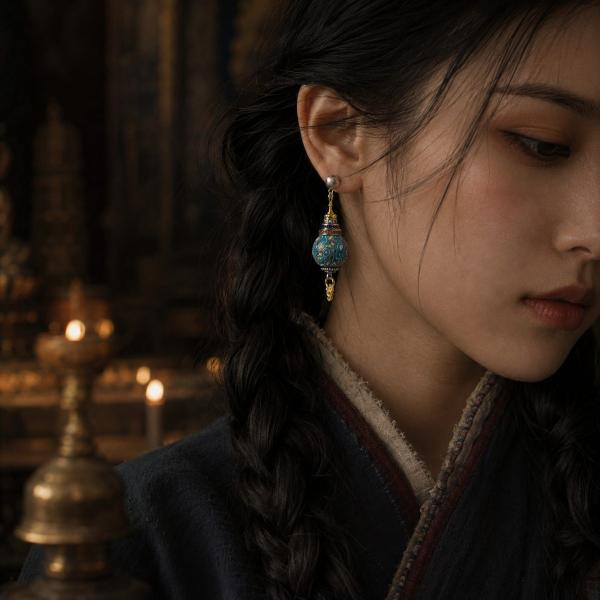
The upper part of each earring is a lacquer bead, and from it hangs a white stupa, the two joined by a silver ring. The stupa is in the domed form: a square base, an inverted bowl above it, and a spire of diminishing rings rising from the bowl and tapering to a point. Tibetan white stupas mostly take this shape. Han Chinese pagodas are of the tower type, stacked storey upon storey, a different lineage altogether. The body here has no doors or windows, only a plain surface read by its silhouette — from a distance, a small white dot.
Lacquer here means raw sap tapped from the lacquer tree, not a chemical coating. A coat goes on, then the piece goes into a humid cabinet at about twenty-five or twenty-six degrees and seventy to eighty per cent humidity, so that the lacquer can cure through. Dozens of coats build the thickness, with sanding in between to flatten the grain left by the previous layer. Good lacquer light comes from within, like brightness under the surface of water; paint's shine sits on top, and the difference is visible at a glance. The darker the colour, the harder the work: black that shows red inside takes layers of transparent coating over it.
A lacquer bead is light, considerably lighter than stone of the same volume, so it doesn't drag on the ear. The surface is warm, and against skin it doesn't go cold the way metal does. The swing of the earring depends on the weight of the bead. Too light and it flutters as you walk, with no authority; too heavy and the lobe suffers. One bead above and a stupa below puts the weight low, so the movement has a rhythm to it rather than being random. The joint of the silver ring must be soldered closed, because an open joint comes apart after a few wears.
The length falls between jaw and collarbone. With a high collar the collar pushes the stupa outward, which is worth knowing before you buy. Round necks and V necks both work. If your neck is short, choose the shorter version so the point doesn't press on the collarbone. As you walk, the lacquer bead and the silver ring touch lightly, and the sound is dull rather than the bright click of metal on metal. In quiet places — a meeting, a gallery — that kind of earring suits better than a pair that chimes. On a thin lobe the weight of the stupa pulls the piercing down, and one size shorter is steadier.
One thing to know about raw lacquer: uncured lacquer can affect the skin, causing redness, swelling and itching, which is lacquer dermatitis. A finished, fully cured piece is normally fine, but with a new arrival, don't wear it against the neck for the first few days; try it on the inner wrist for a night first. Lacquer dislikes prolonged soaking and dislikes direct sun, so take the earrings off before showering or swimming. Keep them away from radiators when storing. The surface can develop fine lines when it dries out over time, and a little walnut oil eases that — not much.