


Menu
By theme
By theme

{{ variable.name }} : {{ variable.values[selectedVariantsIndex[variable_index]].name }}
Quantity:
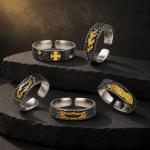
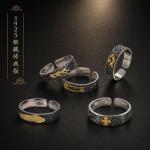
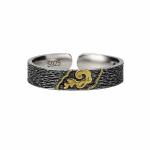
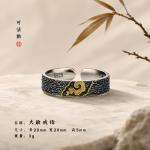
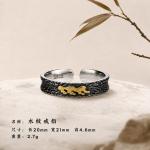
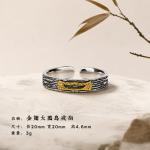
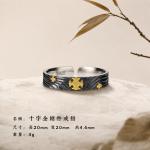
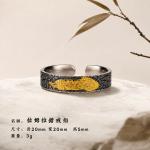
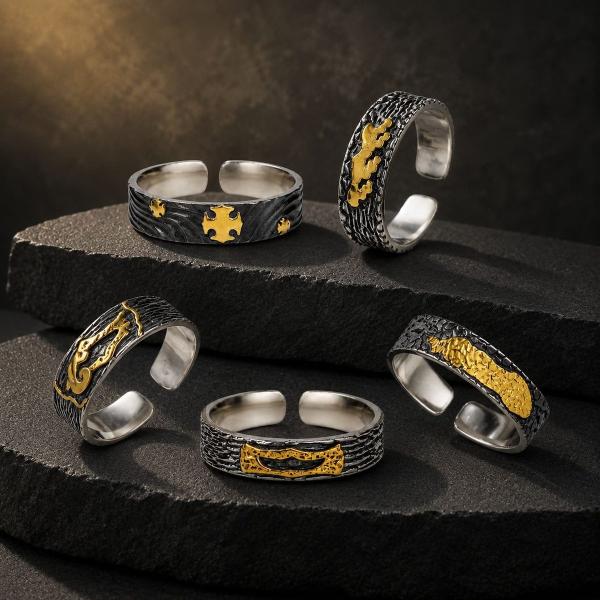
The five designs come from very different places. The crossed vajra is two vajras crossed in an X, also called the karma vajra; in Tibetan mandalas it is often placed at the four corners, standing for firm action. The water pattern takes the direction of flowing water, ring pushing outward from ring. Lhamo La-tso is a lake in Shannan, and Tibet has a tradition of reading omens in the surface of lakes; the images seen there were taken as reference, including when searching for a reincarnated teacher. The great garuda comes from the Indian garuda, called khyung in Tibetan, whose spread wings are said to cover the sky. The flame is the flame of prajna behind a buddha.
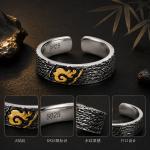
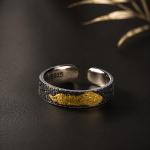
The form is an open band with the face made as a flat or slightly curved panel, and the pattern cut only on that panel. The two ends are rounded into small balls; a straight cut end scrapes the skin. The width of the face determines how fine the pattern can be: a narrow face only takes simple line work, while a wide one has room for layers. Before buying, lay your hand flat and see how much of the back of the finger the face covers. Too wide and the finger won't bend, and it jams when you make a fist.
Silver's hardness decides whether the face can be made thin. Too thin and after two months the face has gone convex and the pattern with it, until flames turn into water lines. A crude test: press the back of the face with a fingertip, and if it gives, it is on the thin side. A good face is hard under pressure and its edges don't curl. Don't leave the gap too wide either. A wide gap loads the two ends unevenly, and the thinner end bends first.
Of the five, water and flame are the easiest to wear, with soft lines that don't fight anything in a wardrobe. Crossed vajra and garuda are hard-edged, steadier with plain or dark clothing; put another hard line over a patterned fabric and the whole outfit goes busy. The Lhamo La-tso design carries a Tibetan note and sits well with a Tibetan-style bracelet or a plain silver bangle, so the set doesn't shout. The flame suits long, slender fingers: the pattern travels upward and the hand looks leaner.
A silver ring wears with time. Raised pattern brightens first, recesses darken first, and after enough wear the shallower patterns flatten. Water lines go first; flames, with their interlocking strokes, last longer. This isn't a quality problem, it is the nature of silver. If you want to preserve the pattern, wear it less for rough work, and don't use it to open bottles or scrape at anything. Don't carry heavy bags with an open ring either: the band can't take the load, and over time it goes oval and won't come back.