


Menu
By theme
By theme



{{ variable.name }} : {{ variable.values[selectedVariantsIndex[variable_index]].name }}
Quantity:
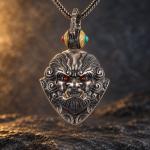
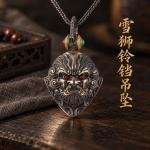
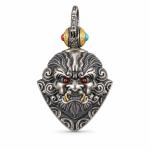
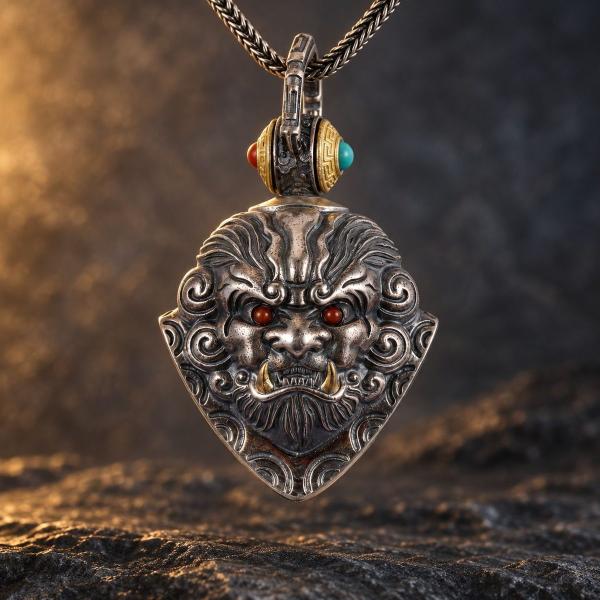
The snow lion is an auspicious beast of Tibet, white-bodied with a green mane, four paws on the snow. In murals it crouches on either side of a door; on seals it stands among clouds; old local banknotes carried it too. It does not bite and does not eat people. Its position is closer to guarding: guarding a door, guarding a stretch of road. In Tibetan tradition the snow lion is the master of the snow mountains, and people at the foot of them paint it on their doors to ask it to watch the entrance.
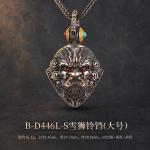
This piece puts the snow lion and a bell together. The lion sits on the crown of the bell, front paws on the bell's shoulder, tail hanging down behind it. The bell body is round, a ring of lotus petals at the rim and a horizontal band at the middle. The large size sounds deep, the small one short. Both ring only when shaken; hanging still, they give just a faint knock with each step. A gap is left between the lion's front paws and the bell body, so the two parts read as separate and there is a sense of front and back. The band on the bell is a raised line dividing it top from bottom, and the paws rest right on it.
A bell in Tibet is not a toy. The vajra bell and the vajra are a pair, the bell standing for wisdom and the vajra for method; in ritual the left hand shakes the bell and the right holds the vajra. The ring of lotus petals at the bell's mouth is borrowed from that implement. Made into a small pendant, the ritual meaning is gone but the form remains. The mouth faces down, as bells normally do. Mouth up makes it a hand bell, and the sound has nowhere to go, which is against the rules besides.
The large size suits a bag or the waist. It sounds as you walk and you can hear where you are. The small one suits a necklace: light, and it will not drag at a collar. People often buy both, one hung and one worn, one deep and one short, and together they are not noisy. Hung on a bag, the knot has to be tight, since the bell has weight and will swing if you walk fast. At the waist, let the cord out a little so it sits against the hip.
A silver bell does not take pressure. The body is hollow; squeeze it and it dents, and a dent muffles the sound. Store it separately, not on a keyring. The sound changes as the silver oxidizes, and polishing brings some of it back; for the inside, wrap it in a soft cloth and shake. The ring depends on the clapper, a small silver bead. Lose it and only a dull thud is left, so do not store the bell mouth-down on anything hard. Large and small use the same clapper; do not swap them, or the sound will not match.