


Menu
By theme
By theme




{{ variable.name }} : {{ variable.values[selectedVariantsIndex[variable_index]].name }}
Quantity:
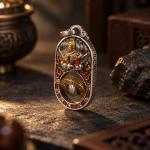
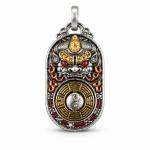
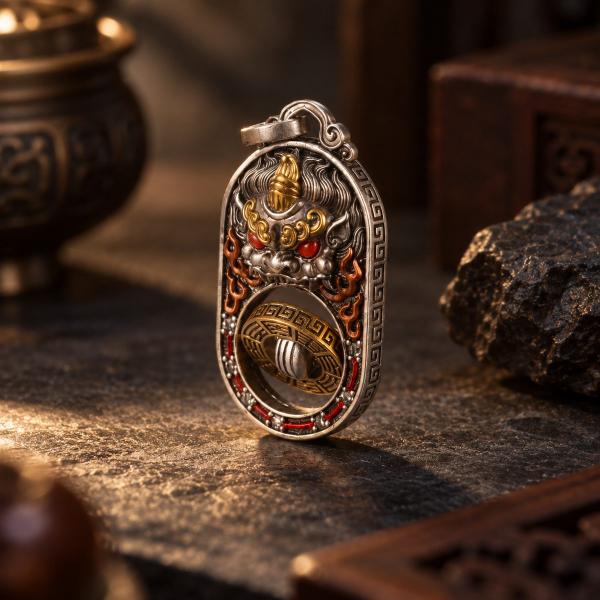
A pixiu image is judged by how it turns on four sides. Lying on a table the front is the best view, and the profile often sags. Worn on the body, the person moves and the pendant turns with them, so the profile and the hind legs have to hold up as well. This one is carved in the round: turn it over and the back has a spine and haunches, not a flat plate. Half the work in the round goes where it is not seen — the turn under the belly, the inside of the leg bend, the hollow behind the ears. Skip those and one turn gives it away.
The pose is couched and about to rise: front legs bent, hind legs pushed straight, chest low, head lifted, mouth half open. Jade carvers call this storing momentum, and it is harder than standing, because the weight rests entirely on the front paws and a careless moment makes it look flopped. With the chest low the neck has to lift higher, or the beast looks like it is sniffing the ground. Here the neck is raised a little so the head can hold. The hind leg joints need bone points; rounded over, it becomes a pig.
Whether a pixiu has horns is disputed. Some say one horn is tianlu and two are bixie; others say the pixiu has none at all. This one keeps a single short horn, angled back and not merged into the brow ridge. A spine line runs from the nape to the base of the tail, with three shallow arcs on each flank. The paws show four toes and the fifth is omitted. One extra toe on a small piece looks cluttered, and old carvers often left it out too.
The hard part of silver in the round is trimming the blank. It comes out of the mold as a lump and has to be taken down with file and paper, layer by layer: too much and it goes thin, too little and it stays fat. The eyes are two hemispheres, polished brighter than the rest, so a highlight lands there and gives it life. Silver is soft and one stroke of the file shows, so it is better to leave it thick; polishing subtracts, and what is subtracted cannot be put back. The ear rim is only edged, not pierced through. Pierced, it goes thin and deforms with wear.
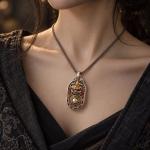
Wear it with the head facing out. That is the old saying: mouth outward, so it can take things in. Some do not care, and comfort is enough. Choose a heavier chain; a piece in the round has weight and a fine chain will flip it over. Knocking a table gives a dull note, and the corners are always the first to round off in knocks. Silver darkens with long wear and the black in the recesses deepens, which makes the spine line clearer. That is the temperament of the metal.