


Menu
By theme
By theme


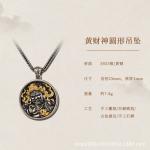
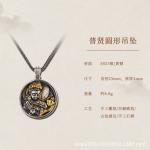
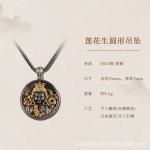
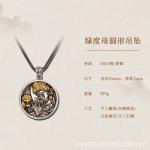
{{ variable.name }} : {{ variable.values[selectedVariantsIndex[variable_index]].name }}
Quantity:
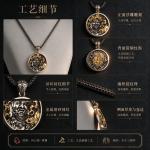
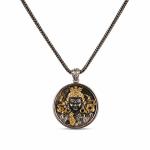
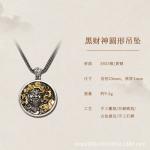
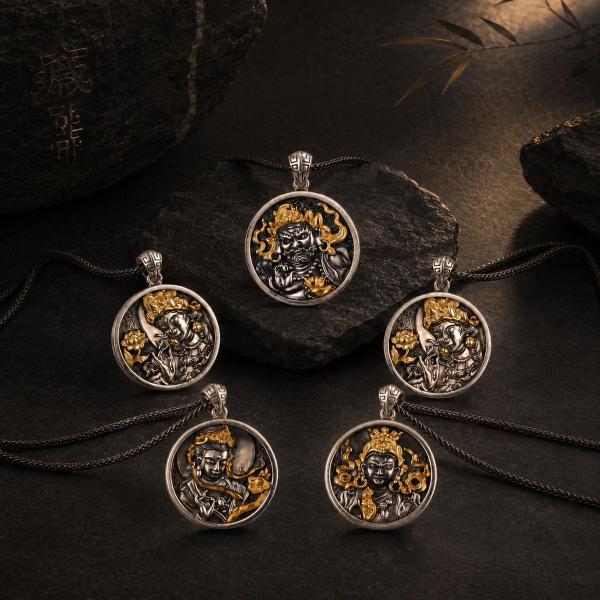
The round plaque is the commonest form among Tibetan personal pieces. The circle stands for completeness, the edge is polished back, and it lies flat against the chest without digging in, nor does it push four corners into the cloth the way a square plaque does. A figure on such a small face means the carver has to strip the background away and keep only head and shoulders. So a round plaque is judged on the face and the hands, and robe folds can only be reduced to a few lines. The hole is usually at the top, so the cord passes through it and the pendant hangs straight.
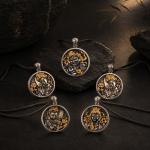
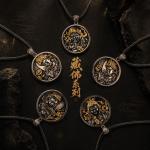
This set has five subjects, each identified by its own marks. Samantabhadra rides a white elephant, the elephant's head turned back; Padmasambhava wears the lotus hat, holds a vajra in the right hand and cradles a khatvanga in the left arm; Green Tara is green in body, right hand in the gesture of giving, left holding an utpala flower; Yellow Jambhala holds a wish-fulfilling jewel and a mongoose; Black Jambhala is dark in colour and plainer in form than the yellow one. Put the five side by side and you can tell them apart without the faces.
In Chinese Buddhism Samantabhadra stands for practice and vow, against Manjushri's wisdom: one for understanding, one for doing. Padmasambhava is the figure who brought Buddhism into Tibet, and the Nyingma school honours him as its founder. Green Tara is held in Tibet to answer quickly, first among the twenty-one Taras. The two Jambhalas each have their own office, yellow for increase and black for protection. Each of these readings has its source, and there is no need to blend them. Of the five, Padmasambhava and the two wealth deities sit firmly in the Tibetan system, while Samantabhadra and Green Tara are acknowledged in both Chinese and Tibetan practice.
Which one to choose usually depends on which subject you already have dealings with, not on price. For a gift, Green Tara and Samantabhadra are the easiest to receive; Padmasambhava belongs to the Tibetan system, and a recipient who does not know it may miss what is good there. Black Jambhala looks fierce, and people who do not know him take him for a protector; he is a wealth deity too, only with an unapproachable face. The rim of the plaque is rounded, so it will not fray a collar with long wear.
Worn against the body, the back of a silver plaque polishes bright while the recesses on the front collect sweat. Every so often use warm water with a little mild soap, work a soft brush along the lines, rinse and dry. Skip the ultrasonic cleaner, which washes the black out of fine lines unevenly and can blur polished edges. Replace the cord when it frays, rather than waiting for it to break at your neck. Silver fears sweat, not water: rinse it clean, dry it, and it will be fine.