


Menu
By theme
By theme





{{ variable.name }} : {{ variable.values[selectedVariantsIndex[variable_index]].name }}
Quantity:
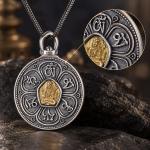
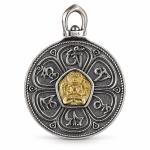
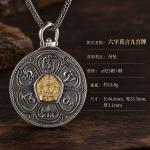
The six-syllable mantra is Avalokiteshvara's heart mantra, om mani padme hum, the line most widely recited in Tibet. The six syllables are traditionally matched to the six realms and to six colours, and as you visualise one realm or another the colour of the letters shifts with it. Pronunciation varies from place to place, and the Chinese characters only record the sound, so there is no need to force them into Mandarin. The syllables are carved differently from region to region, and some versions join the two middle ones into a single character. The last syllable closes the line, and by the time you reach it your breath is about spent.
The nine-grid plaque is another thing altogether. At the centre is a three-by-three grid with the numbers one to nine in the Luoshu order, five in the middle; around it a ring of bagua trigrams; and outside that, on some versions, the twelve zodiac animals. Tibetans carry it as a personal piece and also hang it over a doorway. The arrangement of the numbers is fixed, and every row, column and diagonal adds to the same total, which is the rule of the Luoshu itself. The grid lines must be straight; lean them and no amount of correct numbering will show the pattern.
Putting mantra and grid on one plaque joins two lines of protection in one place. Characters above, grid below: the characters have to be clear and the grid true, and once either goes slack all you have left is pattern. The plaque is square with rounded corners, and at the chest it sits neatly over the placket of a shirt. It is wider than the usual round plaque, so a narrow collar will press it against the collarbone. Which comes first, characters or grid, differs between versions, and either becomes familiar.
Use a red or brown cord, in keeping with Tibetan habit. A chain works as well, but a square plaque turns on a chain and looks right only once it has settled. With a shirt, place it below the second button so a corner shows; showing the whole thing makes it look like a hanging ornament. The plaque has thickness, so leave a little slack when wearing it close. Choose a finer chain: the plaque is heavy and a thick chain tips it up.
The cuts are shallow and dust lodges in the strokes. Brush dry with a soft brush along the direction of the strokes, not back and forth across them. Silver darkens from the inner corners of the grid first, and that ring of black need not be cleaned out completely; clean it and the depth goes. Do not soak the whole piece in silver dip, which rounds the fine strokes of the mantra. Keep the plaque away from keys, since a knock rounds a corner of the grid at once. Wash with warm water, not hot, which turns silver white.