


Menu
By theme
By theme


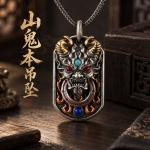

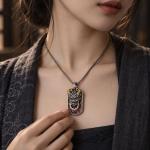
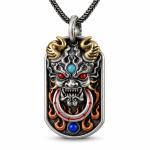

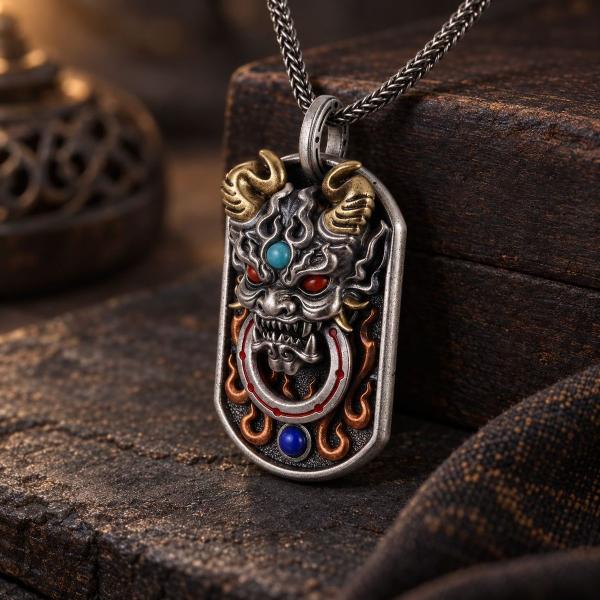
{{ variable.name }} : {{ variable.values[selectedVariantsIndex[variable_index]].name }}
Quantity:
The two characters for root talisman mean that the talisman writing on the face of a charm coin has been copied as it stands, without added figures and without the bagua. A charm coin does not circulate; it is cast for two uses, guarding a house and being carried. Mountain Ghost coins were struck in large numbers among the people in the Qing, in many versions. A root talisman keeps only the writing, stripping away the rest of the ornament and leaving a skeleton. The root here means the base text, not the root of origin. If the hanging hole on a talisman plaque sits off centre, the pendant hangs sideways, so check that it is true.
A talisman has structure. At the top is the talisman head, usually writing the command or the Three Purities; in the middle is the talisman belly, which carries the deity's name and secret characters; at the foot is the talisman foot, closing into a seal or a flourish. The main characters of a Mountain Ghost talisman are the two for Mountain Ghost, usually flanked by thunder scrolls whose strokes break like lightning. The head has to hold the whole thing down, or the talisman falls apart with a light head and heavy feet. Some masters close the foot with three loops, others drag out a long tail; each school has its method. The head is written wide in order to press the characters below it, so the top-heavy proportion is deliberate.
Writing a talisman on paper, one stroke can carry dry and wet; carving one in silver means the graver travels the whole way and the thickness lives in the hand, so turns come out harder than on paper. What you look at on a silver plaque, then, is whether the breath runs unbroken, not whether it matches a copybook. A bad cut cannot be corrected: one cut is one cut, and that is what makes a silver talisman harder than a paper one. Silver is ductile, so a graver that slips a little can be brought back; cut too deep and the only recourse is to grind it out and start again.
Plaques like this are usually worn against the body, inside clothing, not shown. Keep the cord short so the pendant sits above the heart. Take it off to wash, since soap left in the grooves of the strokes turns white over time. In summer, with more sweat, press it dry with a cloth after a day's wear rather than letting salt crystallise in the cuts. Tie the knot behind the plaque so no knot shows at the front, and it looks clean.
Do not pick the black out of the grooves with a needle. Every pick adds a scratch, and the next darkening comes faster. Brush along the strokes with a soft brush and press the silver cloth on the raised surfaces, leaving a little dark in the grooves, and the skeleton of the talisman reads more clearly. The plaque is thin, so do not keep it in a pocket with coins, where the edge will curl. And do not flex it in your hands to look at it; two bends and it is out of shape.