


Menu
By theme
By theme



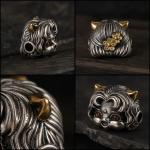

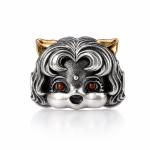

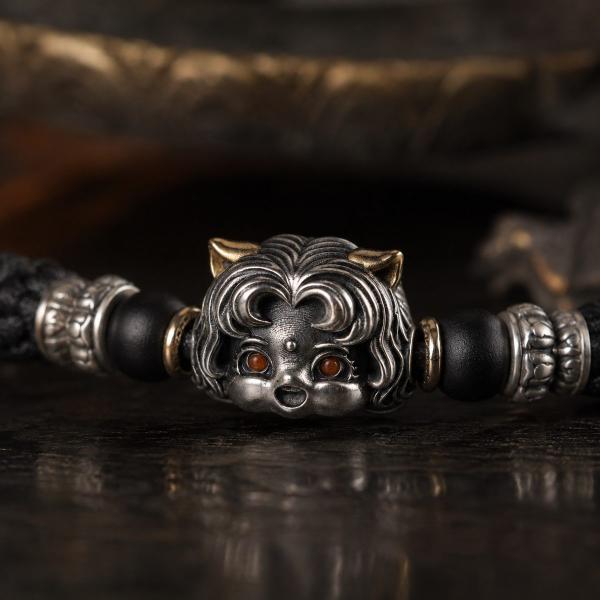
{{ variable.name }} : {{ variable.values[selectedVariantsIndex[variable_index]].name }}
Quantity:
On Mount Qingqiu there is a nine-tailed fox: that is the record in the Classic of Mountains and Seas, in its Southern Mountains section, and the original only says that its shape is that of a fox with nine tails and its cry like a baby's. It does not say it eats people. On Han stone reliefs it crouches beside the Queen Mother of the West, in company with the jade rabbit, the toad and the three-legged crow, which is the place of an auspicious beast. The position alone settles the question, since whatever sits beside the Queen Mother of the West is not a menace. The nine is a round number too; in old books nine usually means many.
Later novels piled layer on layer and turned it into a creature that ruins kingdoms. Pattern and story have to be kept apart: in the pattern it is the Queen Mother's attendant, in the story it is something else. People making small objects take the former, tails spread, body couched, not fierce. The nine tails are handled with care as well: fanned out is the steadiest arrangement, and gathered into one bundle they look thin. The fox's face should be pointed and the eyes narrow; round them and it becomes a cat. The tails gain depth by overlapping, each pressing the one behind, or the fan comes apart.
This is a component, not a finished piece. A cord hole is left behind the tails, so it can take a cord, a chain or beads: string your own bracelet, or hang it on an existing strand as a pendant. A single piece is small, so keep the two sides balanced when stringing; heavier on one side and the bracelet turns. It works for earrings too, if the two pieces are close in weight. If the hole is off centre, the fox's head will sit crooked once strung, so lay the piece flat and look at the hole when choosing.
The hole in a silver component has to run smooth and be chamfered at the mouth, or the cord rubs back and forth inside and frays within a few months. When it arrives, test it with a scrap of cord, and if it drags, ease the mouth with a fine sanding stick rather than a knife. A cut edge leaves a burr and does more damage to the cord than none at all. Blow the sanding stick clean afterwards, since grit left in the hole will grind at the cord.
The gaps between the nine tails hold dust. Brush along the direction of the tails with a soft brush, never against it, which pushes dust down to the bottom of the gaps. Silver darkens from the root of the tail first; that ring cannot be reached, so let it read as shadow. The piece is small, so store it separately; pressed in with other silver it will knock and mark. Blow the dust out of the hole before it goes in the bag. With long use the hole polishes into a bright ring, left there by the cord.