


Menu
By theme
By theme





{{ variable.name }} : {{ variable.values[selectedVariantsIndex[variable_index]].name }}
Quantity:
The qilin is a beast of benevolence. Tradition says it does not tread on living grass or break a living branch and picks its footing, which is why it ranks high among auspicious beasts. The fire qilin is a later variant, common in New Year prints and small plays, which adds fire to the qilin and makes it look fiercer. The old pattern usually has the qilin standing with the eight treasures around it; the fire qilin crouches with fire on its back, a different line of approach. A qilin has deer's antlers, ox's hooves and scales on its body, and all three together are what make it.
A spacer's job is to divide. A strand of one size from end to end looks dull; slip a few smaller beads in and the rhythm comes back. A spacer is usually a size below the main beads; too large and it becomes the lead, and the balance of the strand goes. Put them between the third main bead from each end, symmetrical on both sides, and the strand reads best. There is no need for many: two or three is enough, and more makes it fragmentary.
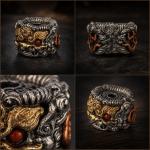
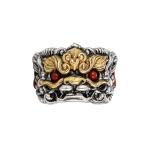
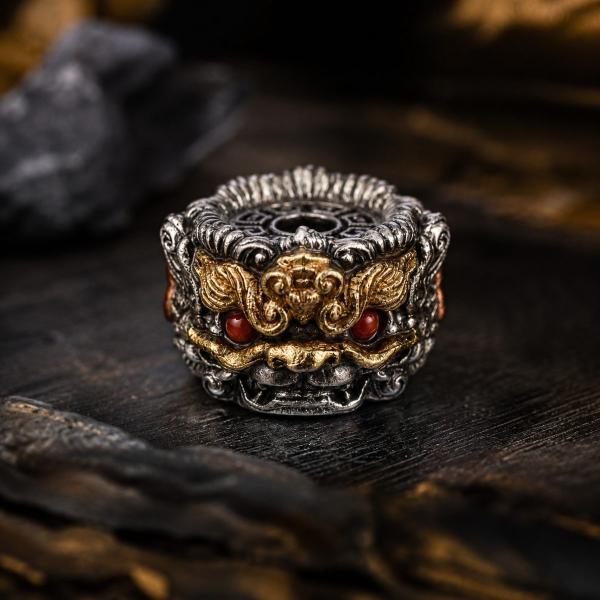
On the fire qilin the point is the flame. The fire divides into three or five tongues curling up from shoulder and back, with tips drawn very fine. Cast silver loses such fine tips most easily; a good piece has them intact, and where they are missing the break shows a blunt face. Look along the flame tips against the light before buying. The flames should all run the same way, since one to the left and one to the right is a mess. If the tips come out rounded, the metal probably did not fill the mould. The base of the flame has to hold; hollow underneath and the whole beast floats.
With dark wooden beads the white of the silver jumps out; with pale bodhi seed the silver sinks back. One to a strand is enough, and three is too much fire. It is best to put a plain silver disc on each side of the spacer so the flame tips do not dent the beads. Between wooden beads a silver spacer will press a small hollow into the wood, which is normal.
Dust and cord fibres lodge in the gaps between the flames. Brush along the direction of the flames with a soft brush, not with a needle. Once the silver darkens, the black in the gaps against the bright flame looks better than new. Do not soak it when washing, since water in the gaps dries slowly. Do not scrub the gaps with a toothbrush, whose stiff bristles leave fine scratches on the silver. Let a washed piece dry completely before restringing.