


Menu
By theme
By theme


{{ variable.name }} : {{ variable.values[selectedVariantsIndex[variable_index]].name }}
Quantity:
The Medicine Buddha's full name is long: Bhaisajyaguru, the Medicine Master of Lapis Lazuli Light. The sutra gives him twelve great vows, and every one of them lands on sickness — sickness of the body, sickness of the mind, the case where there is no doctor and no medicine to be had. That is why the figure has stayed tied to the idea of safety in folk practice rather than to the pursuit of money, and why the people who keep him are usually households with an elderly parent or small children in them.
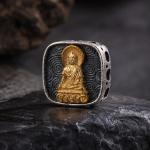
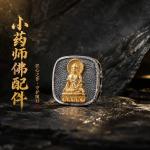
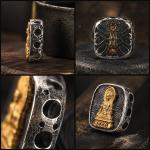
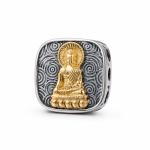
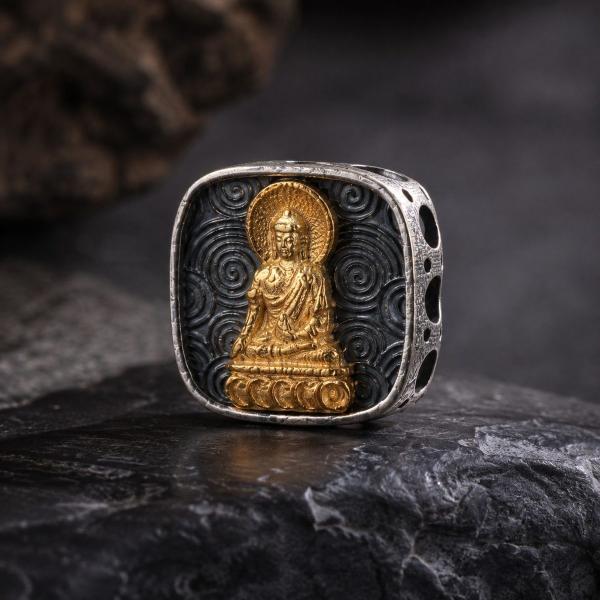
This one is a square plaque with straight edges and the four corners eased into small rounds. A small Medicine Buddha sits in the middle in the cross-legged posture, a medicine bowl resting in the left hand and the right hand in a mudra. The figure is small, the robe is indicated with a few folds only, and the face is left largely blank; cut finer than that at this size and it would smudge. Above him an auspicious cloud presses down on the composition, its head curled three times, and that curl is what reins in the hard edges of the square, so the plaque does not read as a board. A single incised line runs round the rim of the bowl, and that line is the quickest way to recognise him.
The difference between a round plaque and a square one is a matter of temperament. A round plaque is soft; a square one is upright, and worn at the chest it hangs like a small seal. The edge is where the work is judged: the straight sides have to stay straight to the end, all four of equal width, and the polishing must not round them over. Round them and the piece becomes what the trade calls a bread plaque — acceptable at a distance, collapsing when you look closely. Old hands look at the edges of a square plaque before they look at the carving. Worn for a long time, the plaque will hang slightly to one side, because the centre of gravity is not in the middle; a slip knot in the cord brings it back.
The auspicious cloud is an early motif in China. There is the cloud-scroll of the Han, the ruyi cloud, the curling cloud, each period with its own way of running the line. It began as a description of the sky and ended up as a general piece of vocabulary that any subject can borrow without overstepping, Buddha images included. On this plaque the cloud heads are lightly darkened: recesses deep, raised passages bright, and the cloud lifts off the surface.
The reverse is plain, so it lies against clothing without rubbing. Use a dark cord — dark red or ink black; pale colours cannot hold their own against the white of the silver. Some people sew the plaque onto a small cloth pouch, others hang it below a car's rear-view mirror, in which case keep the cord short or it will swing into the glass whenever the brakes go on. Silver dislikes sweat, damp and chemicals: take it off before washing or swimming, and keep perfume away from it. When it dulls, use a silver cloth and not toothpaste, whose grit fogs the face. Do not leave it beside a perfume bottle either; alcohol on the air leaves a white film that takes real work to shift.