


Menu
By theme
By theme






{{ variable.name }} : {{ variable.values[selectedVariantsIndex[variable_index]].name }}
Quantity:
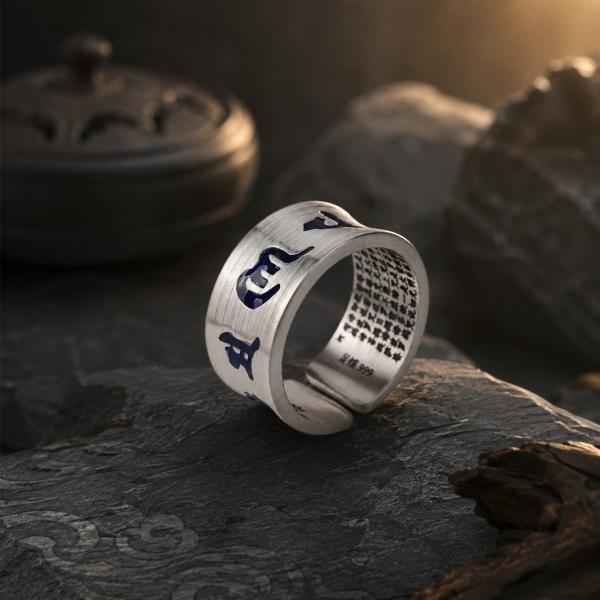
Size is the hardest part of selling a ring. A finger can differ by a fraction and the fit will feel wrong, and a wrong measurement means an exchange that inconveniences everybody. The open shank exists for that problem: leave a gap, bend the two sides a little apart or a little together, and the wearer sets the fit. Fingers swell in summer and shrink in winter, and an open ring follows them, which is one less thing to think about than a closed band. The gap sits on the palm side, where it does not dig in when the hand closes and catches on less while you work.
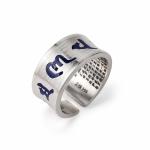
The face of this ring carries the six-syllable mantra running round the band. The face is wider than a thin band, so the characters have room to sit and are easier to cut. The six are om ma ni pad me hum, the heart mantra of Avalokiteshvara and the set most often carved in Tibet. Depth has to be consistent, because bending puts the silver under load and a cut that is too deep will crack first, so the carver holds back and does not go through. A wide face makes a short finger look thicker at the knuckle, so try one on if you can.
The open structure has its price. With a gap in it, the ring gives slightly when the finger squeezes, and anyone used to a closed band will feel it as less solid. Silver is ductile and does not mind being adjusted now and then, but bend it back and forth often enough and the metal either side of the gap thins, and it will break where it is thinnest. Adjust a little at a time rather than opening it as far as it will go, and do not keep working the same spot. After adjusting, press the band and listen: a click means the crack has already started, and the ring should come off.
Wearing the mantra on the hand means something different from wearing it at the throat. The hands work; the characters sit beside the knuckles and are there while you write, hold a bowl, carry a bag. The Tibetan habit is to cut a mantra where it can be seen, as a reminder to the person wearing it rather than a display for anyone else. Once that is clear, a shallow cut that cannot be read at arm's length stops being a fault. Shallow has its own advantage: it does not snag a sweater.
In care, an open ring has one more place to look after than a closed one: the gap. Sweat and dust collect there and darken over time. Clean it with a cotton bud and a little water, and dry it thoroughly afterwards; do not let water sit in the gap overnight. Silver dislikes sulphur, so leave it off in a hot spring, where one soak will blacken it through, past anything a cloth can reach and back to the polishing wheel. Wash hand soap and hand cream off when they get on it. And wash your hands after using the silver cloth, which carries polishing compound and leaves a rough feel on the fingers.