


Menu
By theme
By theme


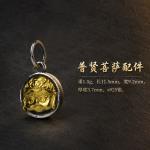
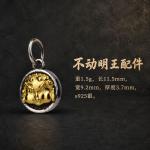
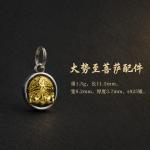
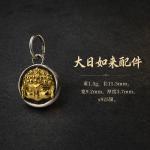
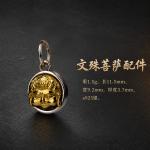
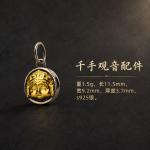
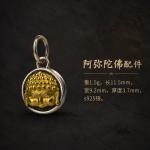
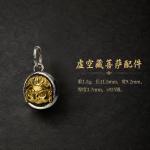
{{ variable.name }} : {{ variable.values[selectedVariantsIndex[variable_index]].name }}
Quantity:
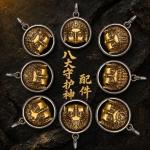
The Eight Great Protectors is a folk name. Another is the eight natal buddhas, one to a zodiac sign, turning through the twelve-year cycle. The scheme is printed widely and the orderings differ a little from one version to the next. A common one runs: Rat to Thousand-Armed Guanyin, Ox and Tiger to Akashagarbha, Rabbit to Manjushri, Dragon and Snake to Samantabhadra, Horse to Mahasthamaprapta, Goat and Monkey to Vairocana, Rooster to Acala, Dog and Pig to Amitabha. Where the scheme came from is not clear. It is mostly eight esoteric bodhisattvas pressed into service alongside the twelve animals, and it is best treated as folklore rather than scripture.
This set covers only six of them: Manjushri, Vairocana, Samantabhadra, Mahasthamaprapta, Amitabha and Thousand-Armed Guanyin. Akashagarbha and Acala are missing, so anyone born under the Ox, the Tiger or the Rooster cannot complete the set, and that is worth saying before an order rather than after delivery. Not completing it is no reason not to wear one: the natal buddha is a popular scheme, not a rule. Six heads on a tray show no hierarchy at all, so choose by whichever you keep looking back at.
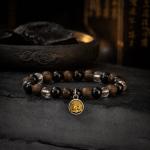
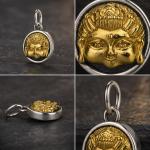
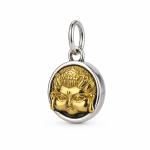
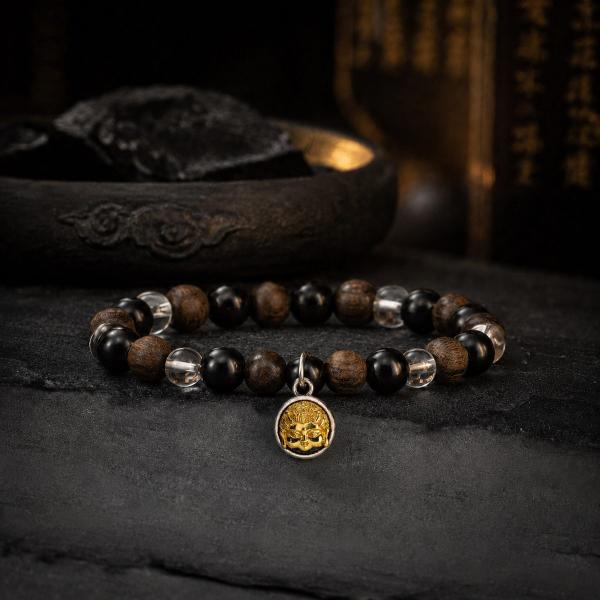
The heads are in relief, one face to the front, flat at the back, with the hole drilled at the crown. A piece like this works as a main bead: one head against a run of plain beads, or at the centre of a bracelet. Because the hole is at the top of the head, the charm hangs as though balanced there, and some people mind that while others do not; better to ask the question before buying than to work it out afterwards. Holes on charms tend to run small, and a thick cord means enlarging it, which wants a craftsman. A drill in your own hand tends to chip the mouth.
The six faces have to be told apart. Manjushri usually carries a sword, sometimes with a sutra resting on a lotus; Samantabhadra usually rides an elephant; Mahasthamaprapta has a treasure vase in his crown; Amitabha sits in the meditation mudra with a bowl; Thousand-Armed Guanyin has a ring of arms behind and keeps a compassionate face at the front; Vairocana has an ushnisha above a head of snail-shell curls. It is easy to buy the wrong one, particularly with Manjushri and Samantabhadra, whose faces come out alike. The difference is all in the mount and in what the hands hold. Set the six side by side and you can see that the faces are cut with one set of tools and separated only by their attributes.
The antiquing makes the features read more clearly, with the recesses dark and the bridge of the nose and the brow ridge left bright. That patina is not permanent. Raised surfaces brighten under the fingers, the recesses deepen with wear, and the face slowly gains layers, which is more interesting than the uniform look it had when it left the bench. Store the piece in its own bag. The tip of the nose is the most exposed point on the whole charm, and packed in with other silver it is the first thing to flatten. Antiqued silver should never go into dip; the patina goes altogether and the face flattens with it.