


Menu
By theme
By theme


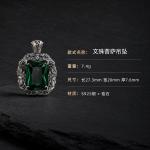
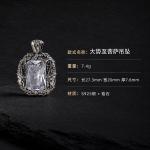
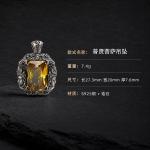
{{ variable.name }} : {{ variable.values[selectedVariantsIndex[variable_index]].name }}
Quantity:
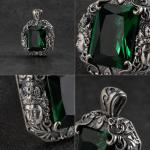
Openwork and relief are two different ways of working. Relief takes material off the face and leaves the ground underneath; openwork takes the ground out as well, so light passes straight through. A plaque made that way is light, does not press on the chest, and as you walk the clothing behind shows through, with a fringe of broken light along the edge. Lightness is the advantage and also the difficulty: a great deal of material has gone, and strength goes with it. Thickness drops too, and the line at the rim has to be slightly thickened to hold the shape, or it will not stand.
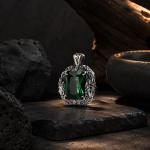
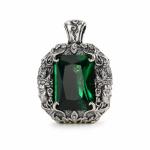
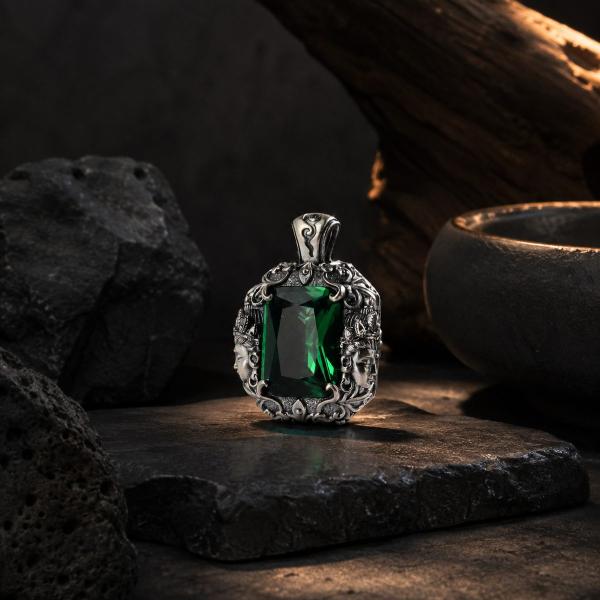
This piece follows the gau box form: a round belly, a lid above, an openwork face, and behind it a bodhisattva in relief. The layer behind is solid, so at a distance the plaque still reads as one complete object, and only close up does the background turn out to be empty. A little space is left between the two layers, and light coming in at an angle lays a shallow shadow across the face, which gives more depth than flat relief would. The pattern on the lid has to line up with the body. If it does not, a broken motif shows and the eye finds it at once.
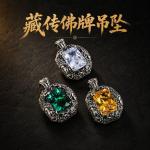
The three versions differ in face and in what the hands hold. Manjushri carries a sword raised at the shoulder, and sometimes a sutra resting on a lotus; Samantabhadra usually rides an elephant, its head at the bottom of the plaque and taking a third of the height; Mahasthamaprapta has a treasure vase in his crown and his hands together. All three are half-length, so read the crown first, then the hands, and the face last. Samantabhadra is the hardest of the three to pierce: soften the outline of the elephant and the plaque stops being identifiable at all.
What openwork fears is a knock. The rim lines are fine, and a knock will not break them but will push them inward, after which the plaque sits crooked and the spots of light scatter. Do not drop it in a bag with keys or coins; hard objects in a bag do more damage than a tabletop does. Do not sleep in it either: roll over onto it and there is a dent by morning. A proper repair means pressing the whole plaque flat again, and the pattern comes back a layer shallower than it was.
Dust collects in the gaps and darkens over time. It looks like dirt, but it is mostly oxidation with dust caught in it. Use a soft toothbrush with clean water and brush along the direction of the openwork rather than across it, because the fine lines will not take a sideways scrubbing. The inner layer cannot be reached and does not need to be; shielded from the outside, it ages more slowly than the face. Keep the silver cloth for the outer rim and the lid only. Do not put the piece away straight after cleaning: leave it half an hour, because a seam that is not dry through will grow green corrosion inside the bag.