


Menu
By theme
By theme


{{ variable.name }} : {{ variable.values[selectedVariantsIndex[variable_index]].name }}
Quantity:
The jade rabbit comes from the moon. In Han dynasty reliefs the moon disc often carries a toad and a rabbit side by side, the rabbit standing with a pestle in the attitude of pounding medicine, and the pair sits before the seat of the Queen Mother of the West. In time the toad withdrew and only the rabbit remained, and what it pounds changed from medicine into the two words for long life. The story has been in circulation longer than the name jade rabbit has. The pestle and mortar are drawn very small in those reliefs, and without close looking they pass for the rabbit's front paws.
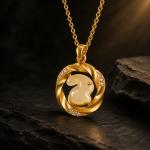
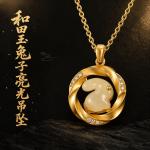
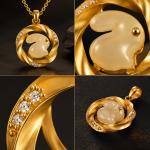
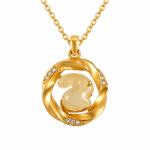
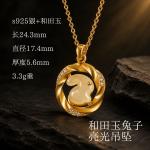
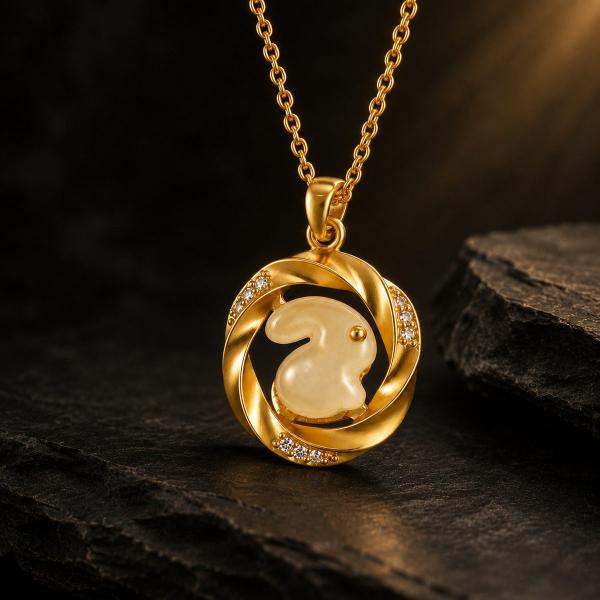
This one is a crouching rabbit: ears laid back along the body, the form curled, the front paws tucked under the chin, the tail no more than suggested. A crouching rabbit is harder to carve than a standing one because there is more closed mass, and the line has to explain itself inside a limited volume — the direction of the ears, the turn of the hind leg — with so little room that a small error turns the whole thing into a round stone. The polish brings out the oiliness of the jade, and light travelling over the curves shows how fine the material is. The eye is usually a small drilled dot, or a shallow hollow, depending on the thickness of the stone.
Hetian jade is nephrite, mainly tremolite, with a hardness of six to six and a half. It is softer than jadeite but tougher, and does not chip readily. Colour runs from white through green to ink, and white is not automatically the best; oiliness and fineness decide that. The surface carries a fine structure like drifting cloud, which is the natural evidence of the stone, and a piece that is too clean is worth a question. There is no need to chase white: a dry white stone is worse than a greenish one with good oil.
Setting jade in silver means a bezel. A sheet of silver is pressed along the outline of the stone and bites the edge, and the back is usually left with a window so that light can come through. A bezel is more secure than claws and costs more labour, and if the edge is pressed unevenly a gap shows. The white of the silver flatters the jade, which looks warmer, and the oiliness of the jade returns the favour; the two improve each other. The bezel sheet has to be even in thickness, because uneven sheet presses out to an edge that is wide on one side and narrow on the other.
Jade chips, and it dislikes sudden heat or cold: keep it away from the radiator in winter and take it off before a bath. A bezel that has loosened should be repaired early; once a gap opens, the stone is held by one or two points only and a knock will take it out. When it is not being worn, wrap it in a soft cloth and keep it on its own. Do not put it in the same compartment as jadeite or agate, which are harder, because jade is soft and a single rub leaves a line. Jade does not need oiling; the oil already on your hands is enough, and added oil only attracts dust.