


Menu
By theme
By theme

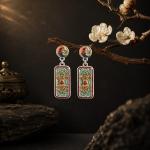
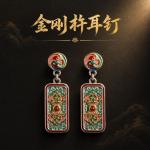

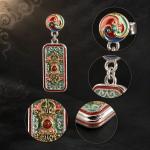
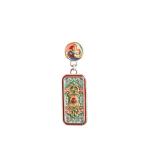
{{ variable.name }} : {{ variable.values[selectedVariantsIndex[variable_index]].name }}
Quantity:
The Chinese name for the vajra is a semantic translation of the Sanskrit vajra, which was earlier transliterated as fu-ri-luo. The object began as the weapon of Indra and became the emblem of Vajrayana: solid, able to cut, indestructible. Among Tibetan ritual implements the vajra and the bell are a pair, the vajra standing for method and the bell for wisdom, and either one on its own tells only half the story. In monasteries the vajra usually sits on an altar, in bronze or in wood; silver is rare because it is soft. Finer pieces were gilded, and where the gold has worn the bronze colour shows through underneath.
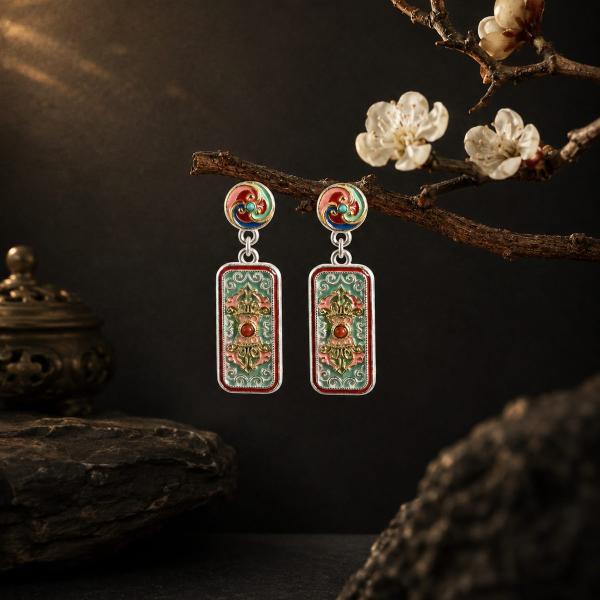
In form they are classed by the number of prongs: a single prong is the single vajra, and there are also three, five and nine. The prongs curve out from the central shaft and gather again at each end into a point. The curve is the most considered part of the design: bend it sharply and the object looks fierce, bend it gently and it loses its force. Scaled down to a stud, the number of prongs can only be reduced, keeping an outline that can still be recognised. Prongs fine enough for a large piece will not stand at this size at all and bend at the first knock. The two ends are not perfectly symmetrical either, one drawn in tighter than the other, which is a habit left over from casting.
The enamel fills the spaces between the prongs. Lines are raised on the silver first, colour is laid into the cells one at a time, and the piece goes into the kiln until the glaze flows level. Colour and silver line alternate, and the structure of the vajra reads more clearly for it, because the colour has filled the gaps and the eye follows the silver. The antiquing blackens the silver line and makes the colour sit back, instead of shining the way new enamel does. Fired too cool, the colour bubbles; fired too long, it goes grey. The whole process comes down to judgement of the fire.
Studs are worn as a pair, and the two should match in weight. If one is heavier the ear will feel dragged by the end of the day. A vajra has a direction to it, and whether the point faces up or down is a matter of personal habit; wear it the way it looks right to you. Take them off before pulling a sweater over your head, because the prongs are fine and one caught thread will pull them out of shape, and a bent prong does not go back. If the piercing sits far back on the lobe, the point will flare outward and look crooked, and that is usually the position rather than the earring.
Enamel chips, and dropped on tile it will lose glaze that cannot be filled in. When the silver line darkens, pass a cloth over it lightly. Do not work along the prongs with pressure, because the compound in the cloth rounds fine lines, and a vajra with rounded edges has lost the point of itself. Take them off for a bath: soap left in the seam between glaze and silver line goes white over time. A toothbrush with clean water, then blot dry before storing. Keep them on a stud card rather than loose in a bag; the prong tips are the finest part of the piece and bend under very little weight.