


Menu
By theme
By theme



{{ variable.name }} : {{ variable.values[selectedVariantsIndex[variable_index]].name }}
Quantity:
Fire gilding is an old process. Gold is dissolved in mercury into a paste, painted onto a silver or bronze body, heated until the mercury drives off and leaves the gold behind on the surface, then burnished. Most of the gold seen on bronze Buddhas and silverwork made before the Ming was applied this way. Mercury is poisonous and the older craftsmen who did this work were seldom well; not many still practise it, and fewer small workshops will take the job on. The thickness of the gold depends on the number of coats: one is thin, three is thick, and the cost climbs with each one.
Pieces sold today with the word gilt on them may be made the old way, or may be electroplated with a gold colour and the word used loosely. Both are on the market and the prices are a long way apart. Asking which one it is before buying is not embarrassing; asking is better than guessing afterwards. The traditional layer is thicker and warmer in tone, and once burnished it has a settled yellow. Plating is bright, cooler, and after a while looks a little thin. Traditional gold binds tightly to the silver body and wears away gradually rather than coming off in patches.
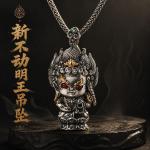
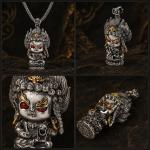
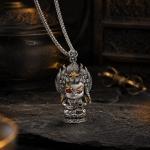
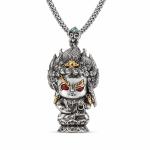
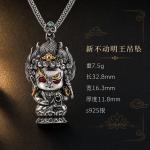
This one is a cute-style Acala: round head, short body, sword and lasso both shortened, and the flame behind him redrawn as a few round petals. Acala is a wrathful figure by definition, and the change takes seven tenths of the ferocity out, leaving three tenths in the brows and eyes, which is exactly what makes him easy to live with. Gold sits on the silver body, the recesses left silver-white and the raised passages gold; with the two colours divided, the outline of the face appears. The cute style came over from Japan, round faces and short bodies applied to Buddhist figures, and it has been argued over ever since, though plenty of people like it.
The gold layer is thin and dislikes abrasion. Raised areas show the base metal first, and what shows is silver-white; seen against the gold it is not disfiguring, only a different colour. Wipe with a soft dry cloth and do not scrub with a silver cloth, whose compound will carry the gold off a little at a time. Never soak it in silver dip: the gold goes dull, the silver goes white, and one object ends up in two colours, which looks bad. A worn gold layer cannot be touched in locally; the piece has to be redone from the start, and that is what makes it more demanding than plain silver.
Hang it on a plain chain. Gold and silver together are already a complicated colour relationship, and a patterned cord tips it into confusion. A dark cotton cord is the better choice and holds its own. Under a high collar, tuck it inside, because the gold layer dislikes friction and a woollen collar will take the shine off in a day. In summer there is more sweat and it collects under the gold, so rinse the pendant in clean water when you get home, blot it dry and put it away. Wipe it before it goes into the bag, and keep it away from keys.