


Menu
By theme
By theme





{{ variable.name }} : {{ variable.values[selectedVariantsIndex[variable_index]].name }}
Quantity:
The number of prongs on a vajra matters. A single-pronged one is one shaft; three-pronged means a centre shaft with one at each side; above that come five and nine, and the more prongs there are, the harder the work. Both ends are lotus thrones and the grip is waisted in the middle, a form that travelled from an Indian hand weapon to a tantric implement with its outline barely changed. To read a vajra, count the prongs first, then check whether the lotus petals line up in a ring. The five-pronged vajra stands for the five Buddhas and the five wisdoms; as prongs are added, a whole system sits behind them and decoration becomes secondary.
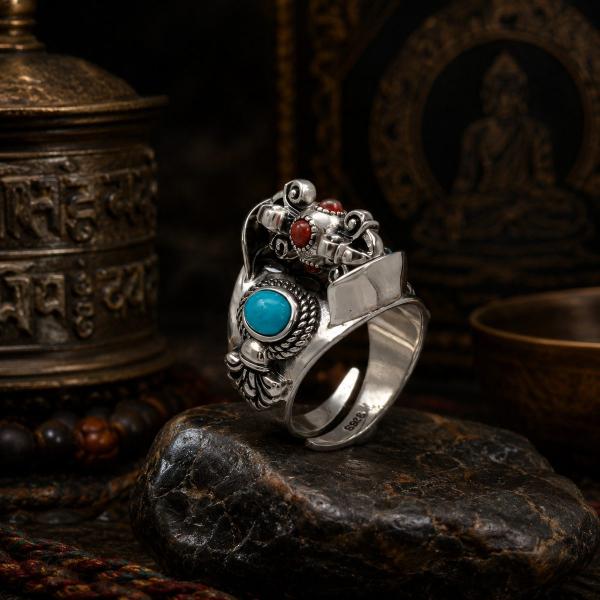
Here the vajra is cut open. A slot is left in the middle of the face, the shaft passes through it, and it turns. The movement depends on an axle on the inner ring and a groove on the outer one. Too much tolerance and it wobbles; too little and it won’t move at all, which is where small pieces jam most often. Openwork’s advantage is weight, since the finger isn’t loaded. Its disadvantage is thin edges: knock one against something hard and it deforms, and once deformed it turns stiffly, binding worse with every turn. Openwork edges ought to be rounded off so they don’t cut and don’t start cracks. That step takes time, and cheap pieces skip it. Where the shaft meets the band is the load point; if the weld there is thin, opening the band twice will loosen it.
One thing needs saying plainly: this is not a prayer wheel. A prayer wheel holds scrolls inside, one turn counts as one recitation, and it has its own rules and explanations. The vajra on this ring turns because the structure is pleasing, and that has nothing to do with merit. The two look alike and come from different places. Don’t conflate them, and don’t sell on the confusion.
The opening adjusts, so a thick knuckle goes through. The shaft stands proud of the face and catches on knitwear, so wear it less with tight sleeves. Silver is a cool colour; black, charcoal and navy all sit well with it. On warmer skin tones bright silver makes the hand look paler, and that affects the result more than the motif does, so look at the back of your own hand before choosing.
Keep oil out of the rotating part. Hand wash and hand cream work their way in and leave a sticky layer in the axle, and the turn goes sluggish. If it does, rinse with warm water, blow it dry and don’t oil it: oil attracts dust and makes things worse. When you aren’t wearing it, lay it flat. Don’t let the shaft bear weight for long, because it will bend off-centre, and once off-centre it turns with a catch that can’t be repaired. A silver moving part shouldn’t sit unturned for months either; oxide builds in the axle, the first few turns are stiff, and then it frees up.