


Menu
By theme
By theme


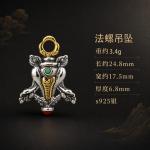
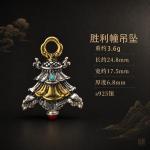
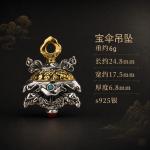
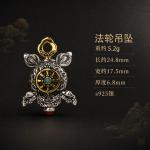
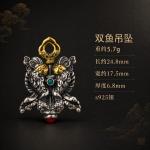
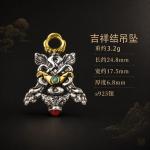
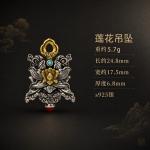
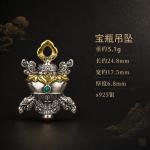
{{ variable.name }} : {{ variable.values[selectedVariantsIndex[variable_index]].name }}
Quantity:
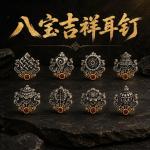
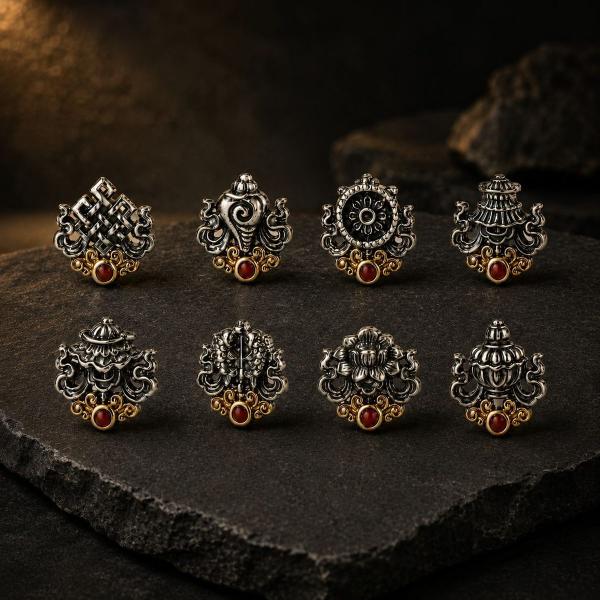
The eight treasures are eight, not six: wheel, conch, parasol, canopy, lotus, vase, fish and endless knot, known in Tibetan as tashi tagye and usually written in Chinese as the eight auspicious symbols. The set is used all over Tibetan material culture: painted on murals, woven into cloth, carved on furniture, and shrunk down to wearable size. Each has its meaning. The wheel stands for the teaching, the conch for the sound of the doctrine, the parasol for shelter, the knot for endlessness. Parasol and canopy are the pair most often confused: the parasol has a handle and ribs, while the canopy hangs and shows only tassels falling from it, so in an image the handle settles the question.
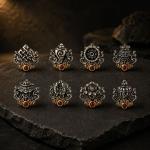
This listing offers six: lotus, conch, parasol, wheel, vase and paired fish. The canopy and the knot are missing. Six out of eight is not a fault, since a single piece needn’t be a set, but if you want a string you should know which two are absent. “Sea conch” and “dharma conch” are the same thing, and “golden wheel” is the dharma wheel. Suppliers’ names are not consistent, so trust the picture over the word. Completing a string means finding the other two elsewhere, and the canopy and knot aren’t guaranteed to appear in another listing; that part is luck.
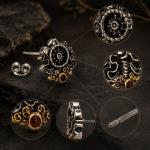
The hardest of the six to make is the wheel. It has eight spokes, the spokes are thin, and a hole has to be left at the hub; a mould a little off and the spokes fuse into a disc. The vase comes next, with a bulging belly and a narrowed mouth where silver wrinkles at the neck. The lotus is easiest: few petals, a loose form, the beginner’s piece. Use these points to judge the work, and whichever of the six is muddy will show at a glance. The eight begin with the wheel in some traditions and with the parasol in others; schools differ, and a string needn’t insist on one sequence.
Earrings are small, and the six only show their differences side by side. One alone looks casual; two different designs don’t clash, and Tibetan wear is often unmatched in any case. Bright silver looks best against dark hair. On light hair a matte finish sits deeper, while bright silver tends to float.
Small pieces have many recesses, so dust them dry with a soft brush and don’t soak them in silver dip. Dip eats the dark in the recesses along with everything else, and once the lines of the eight symbols flatten, all that is left is a few small silver plates. Press with a dry cloth after wearing to lift the sweat; that is less trouble than any other care. If a post bends, don’t force it back with your fingers, because twice will snap it. A flat board with a cloth over it, pressed gently, is more reliable than fingers.