


Menu
By theme
By theme


{{ variable.name }} : {{ variable.values[selectedVariantsIndex[variable_index]].name }}
Quantity:
For the Tang, a peony in flower was an event. It blooms in April and lasts barely three weeks; the temples and monasteries of Chang’an grew them in quantity, and when they opened the whole city turned out and the roads jammed with carriages. Liu Yuxi wrote that only the peony is truly the colour of the nation, and that when it blooms the capital stirs. That was the scale of it. A short season and a large audience is how the peony’s price rose: nothing to do with rarity, everything to do with blooming lavishly and briefly. The brevity entered painting as well. Peonies are painted open, seldom in bud, because a peony in bud looks like any other flower and cannot be told apart.
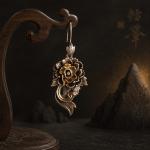
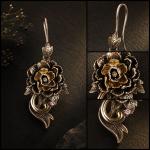
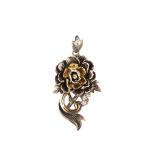
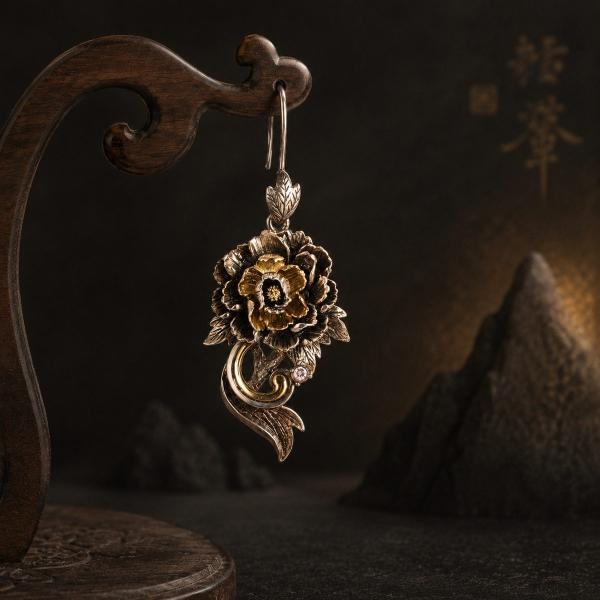
This one takes the moment of full bloom. The petals run in three layers: the outermost flares outward, the middle stays closed, and the heart keeps a small cluster. Silver’s ductility lets the petal edges be pressed very thin, thin enough that light passes through with a faint glow, and that is where a silver flower beats a jade one. The granules at the centre are soldered on afterwards. The solder points hide at the base of the petals, invisible from the front and only found by turning the piece over.
In folk usage the peony stands for wealth and rank, but that reading came late. Tang and Song poets wrote about peonies mostly for their abundance and their brevity, with a note of regret underneath. Only after the Ming and Qing, when New Year prints, brocade and furniture used them wholesale, did the flower of wealth settle into place. The same bloom: the scholar saw rise and decline, the craftsman saw petal form, the ordinary household saw a good omen. Each took what suited them. Ouyang Xiu wrote a record of the peonies of Luoyang, listing more than twenty varieties; Yao Huang and Wei Zi were famous even then, and one good plant cost several months of an ordinary person’s income. A flower’s price has always been set by people.
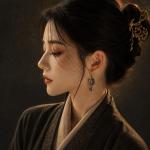
The earrings have drop and sway as you move. A round face should take a smaller pair, since too wide a bloom widens the face across; a long neck can carry more. They look best with the hair up. Worn loose, hair covers half the petals. Bright silver suits plain clothing; against a pattern the two fight and both flowers compete.
The petal edges are thin, so don’t pile them into a box with other jewelry. Silver oxidizes, and this flower has many recesses that are hard to clean once dark, so press it with a dry cloth after wearing instead of waiting for it to go black. If it does go black, use a polishing cloth on the raised petals only and work around the recesses; that way the layering survives.