


Menu
By theme
By theme

{{ variable.name }} : {{ variable.values[selectedVariantsIndex[variable_index]].name }}
Quantity:
Among the stone beasts set before Han tombs there are two kinds: the one-horned is called tianlu, the two-horned one bixie. Apart from the horns they are the same beast, lion-bodied, winged, open-mouthed, striding, placed on either side of the spirit road and far larger than life. The name pixiu later merged with them, and the saying that one horn makes a tianlu and two a bixie is often used to explain the single and double-horned pixiu as well.
In the old texts pixiu is a general term for a fierce beast. The Records of the Grand Historian say the Yellow Emperor taught bears, brown bears, pixiu and tigers to fight the Yan Emperor, five kinds listed together, describing tamed animals drawn up in ranks. Its link with attracting wealth came later. Folk telling has it swallow everything and release nothing, in goes but out does not; the phrase is plain and it spread widely, but it is a folk association rather than a definition from the classics. Folk tradition also divides male and female, the male with its left forefoot on a ball and the female on a cub. That story varies from north to south, so enjoy it by all means, but don’t use it to date a piece.
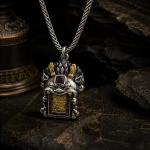
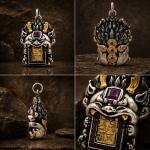
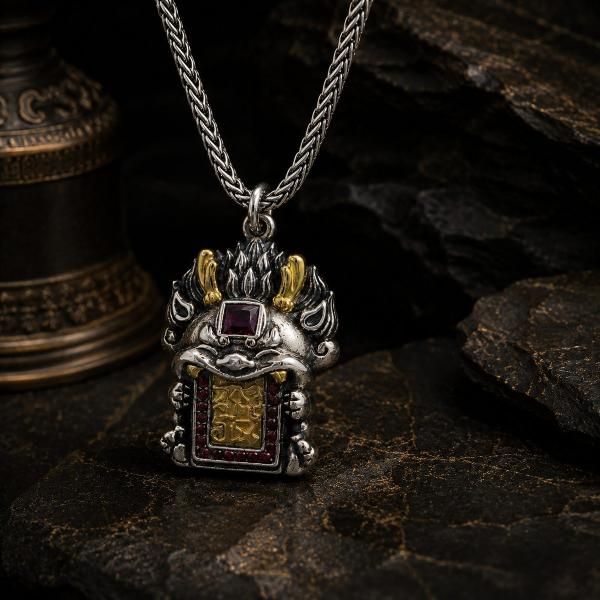
This is a relief, with the beast raised from the plaque. Relief is judged on layering: head, back and legs need a front-to-back order, and the worst fault is a single flat cut. Silver is soft and high points dent, so the good approach keeps the highest point at the head and lets the body fall away toward the rim, so that a knock lands on the hard part. The back is usually flat and sits against the skin without pressing. The ground at the front must be flat as well, or the beast has nothing to stand on; if the ground rises and falls, light scatters across it and the silhouette goes with it.
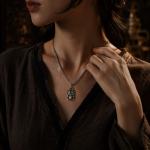
The plaque is squarish and hangs below the collarbone with the face outward. A square plaque flips easily on the chest, and a slightly stiff cord holds it steadier than a soft chain. A man can wear it on a leather cord, a woman on a fine silver chain; the same plaque reads very differently. With a low neckline the whole face shows and the design has to hold up to close looking, and that is where differences in workmanship appear.
Silver darkens in the recesses first, and that darkness sets off the outline of the beast, so don’t be in a hurry to polish it all away. Use a polishing cloth on the raised surfaces only and work around the recesses; after a few goes the light and shade come forward. Store it in a bag when it isn’t worn, away from damp. Folk custom has the pixiu’s mouth facing outward. Believe it or not as you please, but someone will always mention it if you wear it the other way. Try to keep the outer face from touching hard objects, since silver is soft enough to take a fingernail mark. If the four corners of a square plaque are sharp they will push against clothing over time; rounded corners sit better.