


Menu
By theme
By theme

{{ variable.name }} : {{ variable.values[selectedVariantsIndex[variable_index]].name }}
Quantity:
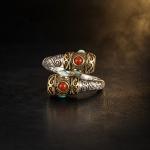
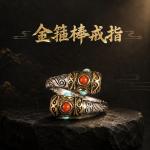
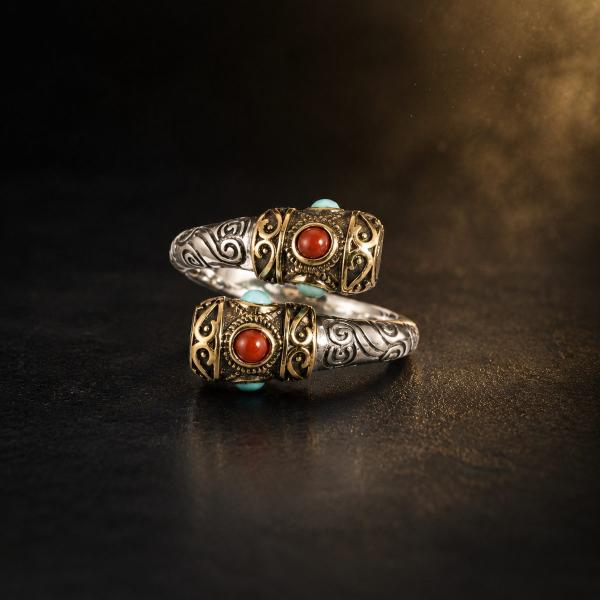
The golden-hooped rod has a hoop at each end, and that is where the name comes from. The as-you-wish golden-hooped rod, weighing thirteen thousand five hundred catties, comes from Journey to the West: originally the pillar that steadied the sea in the Dragon King’s palace, and after Sun Wukong took it, able to grow or shrink at will. A gold hoop at each end and a length of black iron between them. The book is explicit, and a ring that follows the form won’t go far wrong.
Its origin is interesting as well. The sea-steadying pillar was planted in the ocean to measure the water level, not to fight with; it was said to be a plumb stone left by Yu the Great when he controlled the floods, and later kept in the dragon palace under the name of the divine iron that settles the river bed. A ruler for measuring water, taken up and used as a club. There is something in that turn: the line between tool and weapon is only ever a matter of use. The rod’s ability to grow and shrink can’t be shown on a ring. All that can remind you what the thing is, is the two hoops at the ends.
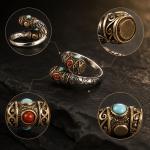
The ring takes the middle section, with a hoop at either end. A hoop is a raised band and will press against the neighbouring fingers, so when it is made the hoops should sit a little lower than the middle, or be moved to the side. The open structure lets the band tighten and loosen, and the joint between the two lengths of rod is where it opens first: the solder sits there, repeated bending cracks it, and a crack means back into the crucible. On a silver ring with hoops, the hoop’s inner diameter has to be a little wider than the finger or it won’t pass the knuckle. An open version solves this with spring; a closed one can only be made to size.
Sun Wukong has been worshipped in folk practice. In parts of Fujian and Guangdong he is treated as a god, the Great Sage Equal to Heaven, with images in temples and no small amount of incense burning. This is neither Buddhism nor Daoism; it is folk deification. Journey to the West is a novel, and a character out of a novel entering a temple is not unusual in folk religion. Before the book was compiled the pilgrimage story had circulated for centuries in promptbooks and opera, and the monkey pilgrim already existed. What the novel did was arrange and elaborate.
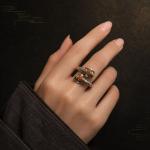
The subject sits on the masculine side. A woman wearing it depends on the finger, since a wide band on a slim hand looks clumsy. Bright silver is easy to look after; a matte finish wears well but is harder to clean. As a gift it suits someone who knows Journey to the West. Otherwise a stick on the finger takes some explaining, and you have to start from the pillar that steadied the sea.