


Menu
By theme
By theme




{{ variable.name }} : {{ variable.values[selectedVariantsIndex[variable_index]].name }}
Quantity:
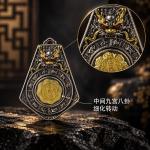
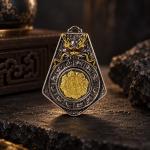
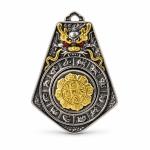
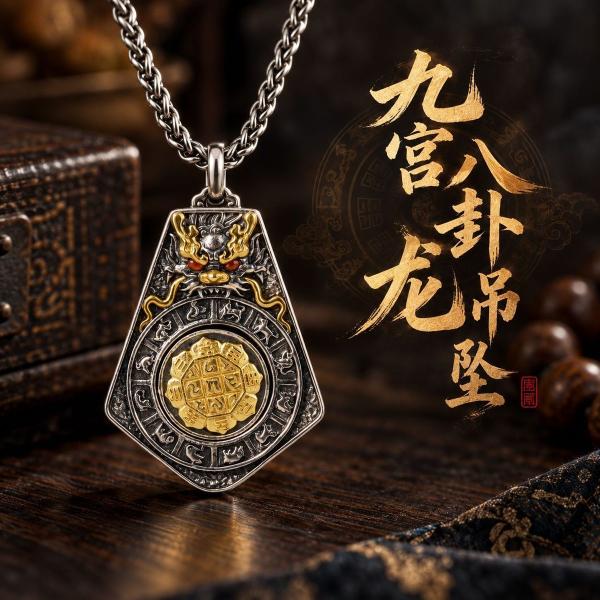
The nine-grid bagua plaque is three concentric rings. The outer ring carries the twelve zodiac animals, the middle ring the eight trigrams, the inner ring the nine palaces, with a figure at the centre. The arrangement is fixed. Read from the outside in, it draws time, direction and number inward in three steps. The face is small and the three rings crowd together, so when one is made the spacing of each ring has to be calculated; crowd it and everything smears into a single mass.
The numbers of the nine palaces come from the Luoshu: nine above, one below, three to the left, seven to the right, two and four for the shoulders, six and eight for the feet. One to nine in nine squares, and every row, column and diagonal adds to fifteen. In feng shui the set fixes direction and works out the influences of the year; the flying stars change palace annually, and the numbers on the plaque are there to check against. Reading it as a table you carry is truer than reading it as ornament.
The eight trigrams come in an earlier and a later arrangement. The earlier one speaks of opposition, heaven and earth facing each other; the later one speaks of circulation, li in the south and kan in the north, zhen in the east and dui in the west. Plaques of this kind mostly use the later arrangement, because it has to work with direction and the year’s influences. Get the order of the lines wrong and anyone who knows will see it at once; it is the thing most often copied badly on these pieces. The zodiac ring outside has one animal on duty each year, and people in their own zodiac year look at their own square for peace of mind, not for fortune-telling.
On most nine-grid bagua plaques the centre holds a three-eyed wrathful face, sometimes called Rahula and sometimes the year god. This one puts a dragon at the centre instead, which makes it a variant. Dragons are common in Tibetan design too, and setting one at the middle of a nine-grid plaque puts a Chinese auspicious beast into a Tibetan format; viewers from either side will find it novel. If the nine numbers were cut as Arabic numerals the flavour would change. Old pieces use Chinese characters, with one, two and three written broad and flat, which is what holds the squares down.
A round plaque turns on the chest. To fix it, wind a few turns of thread around the top ring. The face is flat, so put a soft cloth underneath when polishing rather than rubbing it straight on a table. The rim is thin, and a drop on a hard floor will chip a small bite out of it, and a chip can’t be repaired. The characters on the zodiac ring are the smallest and wear smooth first, so check whether that ring is still legible. If the cord loop is soldered shallowly it will open under load over time; give it a tug before hanging.