


Menu
By theme
By theme

{{ variable.name }} : {{ variable.values[selectedVariantsIndex[variable_index]].name }}
Quantity:
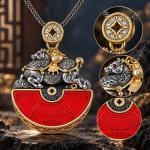
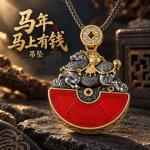
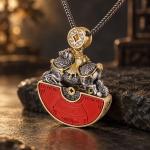
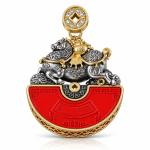
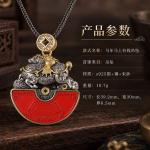
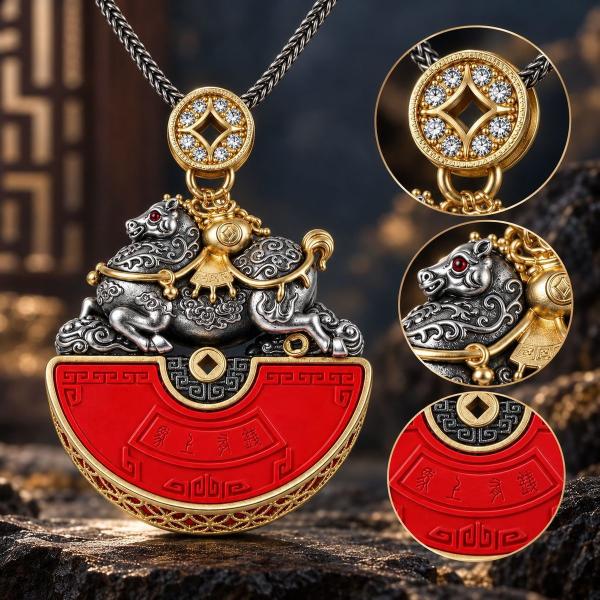
Money on horseback is a spoken pun carried by a picture. On horseback in everyday speech means at once, so a horse carrying coins means money at once, an emblem that explains itself. Objects of this kind are common on folk wares: a vase with a saddle reads as peace, a bat with a coin reads as fortune before your eyes. Images assembled to make four words, and no need to take any of it seriously; it is for the pleasure of the thing. The horse also carries the saying success on arrival, used for exam gifts and shop openings. Coin pattern with a horse takes the on horseback part; put the coins with another beast and the sentence falls apart.
In the Book of Changes the horse is matched to the qian hexagram, qian being the horse, which takes the sense of tireless motion. The heavenly horse and the dragon horse both come from there. In the zodiac the horse comes seventh, and the wu hour is midday, when yang is at its height. Folk painting shows horses galloping, all four hooves off the ground, mane and tail flying. Standing horses are rarer, because a still horse is not moving and the pun breaks.
The copper coin is round outside with a square hole. On pendant coin patterns the characters are usually auspicious phrases rather than reign titles. This piece puts zodiac and coin together, a horse on one face and a coin on the other, so both sides read. Silver has only so much thickness, and deep relief on both faces would leave the middle thin, so plaques of this kind are generally deep on one side and shallow on the other. The square hole is a nuisance: too small and the casting won’t fill it, too large and it stops looking like a coin. On a silver plaque the hole is usually a shallow recess rather than a through-hole, because a pierced plaque tends to crack outward from the hole.
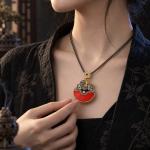
Zodiac subjects suit a gift for someone in their own zodiac year, and suit wearing yourself. The plaque is on the small side and hangs below the collarbone on a short chain. A man can change to a leather cord and a woman to a fine chain. Someone born in the year of the horse wearing a horse is apt, and wearing another animal is no great mismatch either: the meaning here is smooth passage, not exclusivity, so there is no need to pick strictly by zodiac.
Both faces carry pattern, so don’t polish only one. Lift the dust out of the recesses with a soft brush and blow it dry. Left unworn for a long time the whole piece yellows, and a polishing cloth brings it back. Don’t soak it in silver dip, because the dip leaves the grooves white and they have to be worn back in. The cord loosens with use; change it every six months, which is cheaper than losing the pendant. If the grooves are shallow they wear flat before long, so look at the raking light in the photographs before buying: grooves that hold a shadow are the ones that last.