


Menu
By theme
By theme

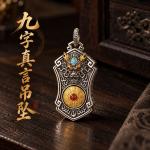
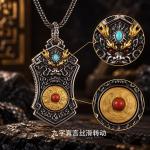

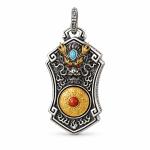
{{ variable.name }} : {{ variable.values[selectedVariantsIndex[variable_index]].name }}
Quantity:
The nine-word mantra runs lin, bing, dou, zhe, jie, zhen, lie, qian, xing, and comes from Ge Hong’s Baopuzi, in the chapter on crossing the mountains. The text says that on entering the mountains one should know the secret invocation of the six jia, and that reciting these nine words keeps a hundred evils at a distance. In Daoism the nine are for protection: going into the mountains, walking at night, crossing water. Japanese esoteric Buddhism received the set as well, written with the last three characters in a different order, a fork that opened in copying.
Each of the nine carries a layer of meaning, and commentators differ across the centuries. Some read lin as steadiness in the face of events, some read bing as weapon, and some match the nine to the nine palaces or the nine stars. What they share is this: the nine stand on their own, they don’t make a sentence, and they are recited one beat at a time, like nine knocks. There is a matching set of hand gestures, the nine seals. Some interlace the fingers of both hands, some use the sword finger alone. No need to go deep into it; it is enough to know the thing exists.
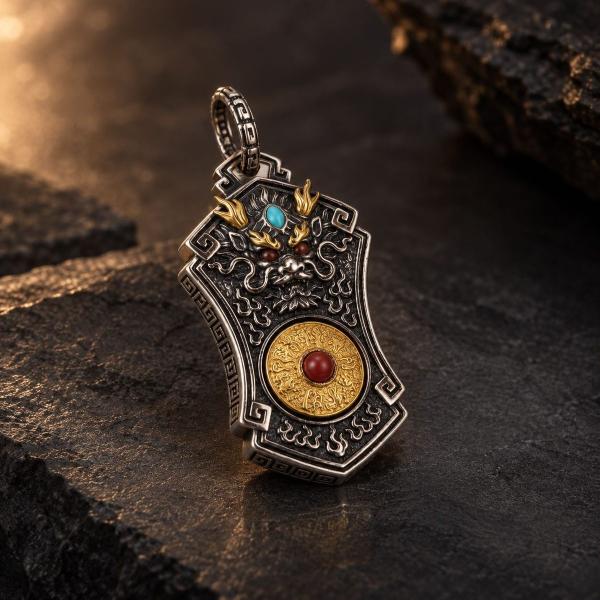
Auspicious beast is a loose term. Dragon, tiger, lion, qilin, pixiu and dangkang can all be called auspicious beasts, and which one a piece shows has to come from the image. This one is named only as an auspicious beast without saying which, so the picture is the more reliable guide. On a relief a beast is identified by head, horns and claws; blur those three and the species can’t be named, and it is just a beast. Brocade of the Han already carried complete designs of tiger, deer and dragon, and the images grew more formulaic century by century down to the Ming and Qing, which makes them easier, not harder, to recognise.
Nine characters in a row need even spacing and clean cuts. Some of the nine are extremely simple, lin and bing among them, and some are dense, zhen and dou. Set side by side, the dense ones smear and the simple ones go empty. Alternating dense with simple is what makes the line look level. That consideration doesn’t show in a photograph, only in the hand, and it is one of the lines between a cheap piece and an expensive one.
The face is dense with information, so wear it with plain clothing. Silver darkens in the recesses first, and the dark inside the strokes should not be dug out, since it is what makes the characters visible. To keep the piece bright, wear it less and polish more, but polishing dulls the grooves. The contradiction can’t be resolved both ways, so decide which side you care about. Bag it when it isn’t worn, and don’t let the face rub against other metal. In a row of characters the middle one wears flat first, because it takes the load most directly.