


Menu
By theme
By theme





{{ variable.name }} : {{ variable.values[selectedVariantsIndex[variable_index]].name }}
Quantity:
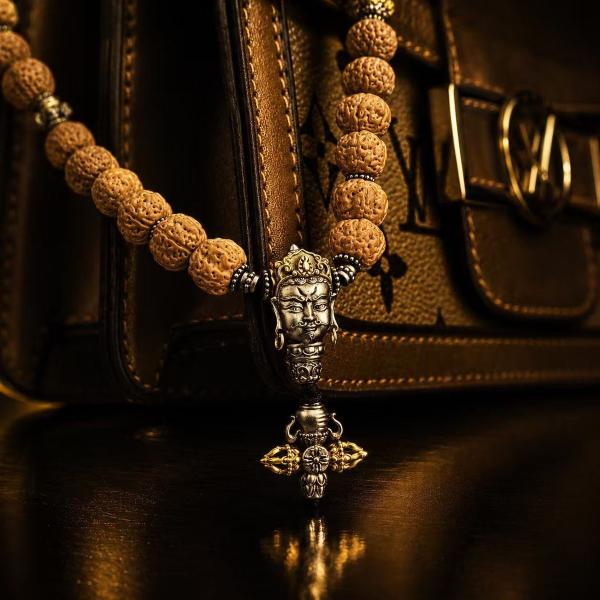
The three-hole bead is the corner in a strand. Beads come along in a line, and here the line has to split, one strand up and two down, so the bead is a size larger than its neighbours and drilled through in three directions. Anyone who strings knows the feeling: choose the wrong one and the balance of the whole strand goes. Top heavy. Or the shoulders sag. If it is a size smaller than the beads around it, the middle of the strand collapses and you start again from the beginning.
This set is white copper with an antique finish. White copper is pale by nature, its reflection cold, and it is hard enough that fine lines do not slump in the mould. Antiquing is not dipping the whole piece in black. Dark is kept in the recesses, the raised areas are polished back to brightness, and only then does the pattern have an inside and an outside. Judge it by the evenness of the recesses. Good antiquing follows the lines with a transition from dark to light. Bad antiquing is patchy, like dirt that has been rubbed on.
Padmasambhava is the eighth-century figure who came to Tibet from India and is honoured in Tibetan Buddhism as a founding master. He came at the invitation of the Tibetan king Trisong Detsen, the building of Samye is connected with him, and the Nyingma tradition traces its line back to him. In painting he wears a red pointed lotus hat, holds a vajra in his right hand and a staff under his left arm, and those three things are how you know him. On this set he is seated, and both the hat tip and the vajra head break the outline. On small pieces those are the first things to blur, so look at whether the edges are still clean.
For pairing, the cold white of the metal goes best with dark beads. Coconut shell, dark wood, black agate, all of them hold. With warm tones such as amber or southern red agate the colours fight, and you need spacers to carry the transition. String it on multi-ply cord rather than elastic. The holes in a three-hole bead meet at right angles, elastic folds hardest at exactly that point and breaks there first. Above the bead usually sits a stupa piece with its flare facing down to gather the three strands. Reverse that order and the strand bulges.
An antiqued piece does not want frequent rubbing. Rub it often enough and the dark lifts out of the recesses, and the pattern goes flat. Press it with a dry cloth as a habit. Once a year, if it starts to look tired, a very little polish on the raised surfaces only, working around the hollows and leaving them alone.