


Menu
By theme
By theme






{{ variable.name }} : {{ variable.values[selectedVariantsIndex[variable_index]].name }}
Quantity:
Two fish, one black and one white, biting each other into a ring. The image is so familiar that few people stop to ask where it came from. The word taiji is old enough: the commentary on the Changes already says that the Changes have a taiji, meaning the point from which all things begin, and in that period there was no diagram at all. The drawing of the yin and yang fish came much later, two fish head to tail, a spot of black inside the white and a spot of white inside the black, turning with no place to start.
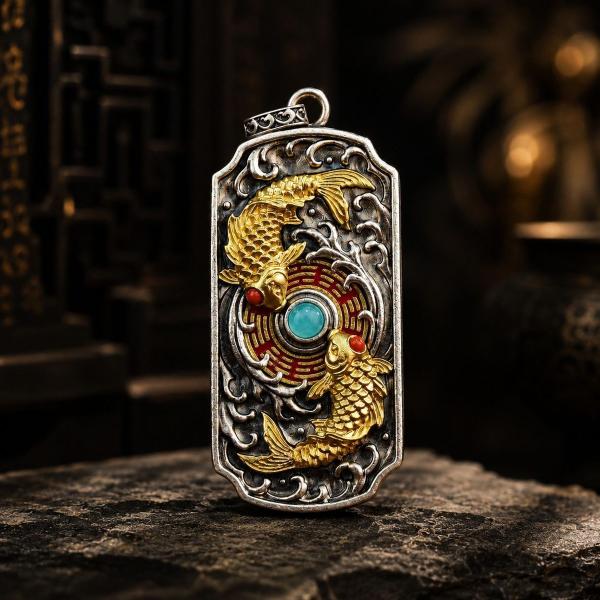
The Song dynasty taiji diagram is a different construction: circle inside circle, describing the levels from the limitless to the taiji. It is not the same picture, though the two are often confused. This pendant puts the fish and the taiji together. The two bodies lie against each other, head to tail, and the S-shaped gap between them is the boundary line. The double fish is an old motif on its own, present on Han reliefs, taking the pun on surplus and also the sense that fish multiply and water never runs out. Setting the two in a swirl stacks surplus on top of turning. That reading is mine, though; I cannot point to a source for it.
The difficulty in silver is the S line. It has to go through in one stroke with no pause in the middle, because a pause breaks the breath of the fish. The eyes have to stand at the same height; one high and one low makes the whole pendant look crooked. Thin silver lets light through, thick silver has weight in the hand, and the mass here is in the bodies. The back is made flat so it does not press into the chest, and the front relief is low, so that when light comes from the side each spine draws its own bright line. That is the moment this pendant looks best.
It is a single pendant, so choose the cord yourself. A plain silver chain is the safest, and a black cord holds it down well. A red cord muddles the yin and yang reading and I would not recommend it. The design points at no particular gender and suits anyone. In summer, when clothes are thin, the pendant hangs below the collarbone; turn your body and the bright line changes sides.
Worn against the skin, silver tarnishes first where sweat gathers, and the recesses of the eyes collect grime faster than anywhere else. Wipe with a soft cloth and keep toothpaste away from it, because the grit turns a polished face to fog. Store it in a pouch when it is off. Two pendants kept together will chip each other along the edge of the S, which is the most exposed line on the piece. Tarnish comes off with a wipe; there is no need to polish often, since too much polishing rounds the ridge of the S.