


Menu
By theme
By theme


{{ variable.name }} : {{ variable.values[selectedVariantsIndex[variable_index]].name }}
Quantity:
On Han dynasty reliefs, Fuxi and Nüwa are human-headed with snake bodies, their two tails wound together. The Dark Warrior is tortoise and snake combined, the god of the north. That is one side of the snake. The other side is in the tale of the White Snake, a thousand years of cultivation and still pressed down under a pagoda. Folk usage also calls the snake a small dragon, a dragon that never grew horns. One creature, several accounts living side by side, none of them giving way. The entwined tails on Han stone are about transformation; the folk saying about a snake coiled round a rabbit is about marriage. The two sets of talk do not touch.
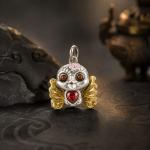
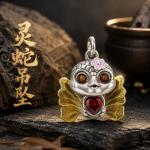
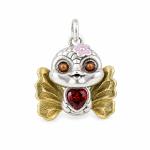
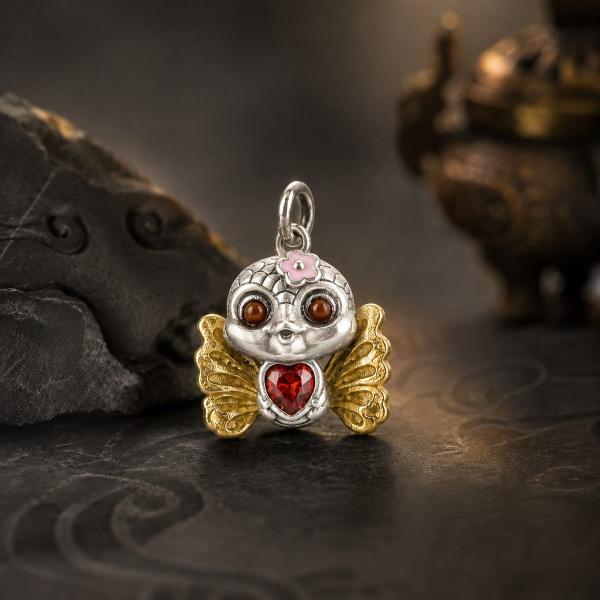
Made into a pendant, the body coils into a ring with the head raised and a small flower set beside it. The pairing is unusual. The snake is cold and the flower is warm, hard and soft in the same place, and the eye goes to the snake first and only then finds the flower. That order is designed, not accidental. The curve of the body has to be drawn in a single breath; pause in the middle and the line dies. The number of coils must stay low, and two and a half is right. Scales should not be carved all over, because across two fingers' width they turn into sandpaper; cut a few on the side that catches the light and leave the shaded side blank, so the scales appear when the piece is turned.
The flower is the difficult part. Silver petals are thin and lose corners in the casting, so the tips have to be rounded; pointed tips read as thorns. The number of petals follows the space available, five being the safest and seven already crowded. Leave a small hollow at the centre so that light falls into it and makes a dark point; without it the flower looks dull. The eyes are two raised dots and their position has to be exact. A little off and the whole expression changes from alert to sleepy. There is no tongue. A forked tongue would make it vulgar, and a blank space is better.
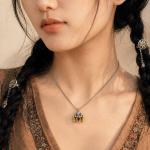
Use a dark cord. Ink black is steadiest and holds down the coldness of the snake; a dark red also works, red and silver being an old pairing. With a crew neck the pendant falls two fingers below the collarbone. Whether the head points up or down is a personal choice: up looks alert, down looks calm. Do not use too thick a cord, since a thick one covers the body and the curve disappears. Dark cord goes pale as it ages, and the answer is simply to replace it.
Sweat collects in the hollows of the body. Press them with a soft cloth and do not pick at the seams between the scales with a needle. Tarnish wipes off in the usual way, but leave the black in the scale hollows, because that is where the depth comes from. Store the piece on its own; the top of the head is the part most easily dented by another pendant, and a dent cannot be polished out. Silver scales dislike cloth, so wipe them lightly and do not press the raised parts flat.