


Menu
By theme
By theme





{{ variable.name }} : {{ variable.values[selectedVariantsIndex[variable_index]].name }}
Quantity:
Mount Qin gets only a short passage in the Classic of the Eastern Mountains, and what it is known for is a pig. The book says there is a beast on the mountain shaped like a suckling pig with tusks, called the dangkang, and its call is its own name. When it appears, the world enjoys a great harvest — rang meaning grain piled high. In an agricultural society no omen was more concrete than that, which is why the dangkang has always been counted among the auspicious beasts, alongside the pixiu and the qilin. The phrase 'great harvest' appears more than once in the Classic of Mountains and Seas, and beasts that herald one generally have something to do with farming.
This one is in profile: snout pushed forward, tusks turning up, a ridge of bristles along the spine, four hooves tucked under the belly, tail curled. A profile reads better than a front view — head on, a pig's face collapses into a circle. The tusks are the sharpest points on the piece, and their tips were rounded in finishing, so they do not prick the skin while still looking sharp from a distance. The base of each tusk runs into the lower jaw, with a small chamfer at the turn, so in profile the tusks grow out of the mouth rather than sitting on it.
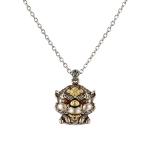
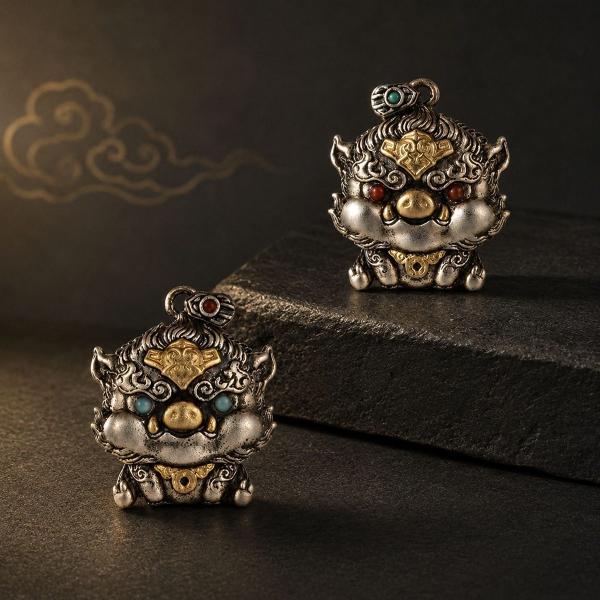
Two versions, one in South Red agate and one in Australian opal. The South Red is a deep red with fine cinnabar dots, and against the silver rim it reads warm. The opal has play of colour: turn it and the blue-green light moves, and the same stone is not the same colour under a lamp as in sun. Opal dislikes dryness and dislikes temperature swings, so keep it away from radiators and do not wear it into a sauna — that is its temperament. The South Red goes a shade darker under cloud, while the opal goes bluer; the two materials respond to light in opposite directions.
Silver shows only at the tusks, behind the ears and at the hole; the rest is covered by stone. The bezel runs along the spine, following the lay of the bristles, and at a glance it does not read as metal. The hole is at the rear of the spine, so when strung the pendant hangs sideways with the head angled forward — the best angle for wearing. The bezel on the South Red is pressed narrow, and on the opal wider, because opal chips at the edge and needs more coverage.
Neither material should go into an ultrasonic cleaner; the vibration alone can crack them. Wipe South Red with a soft cloth; dab opal with a barely damp cloth and blot it dry. When the silver rim darkens, put a little silver paste on a cotton bud and apply it to the metal only — keep it off the stone, because polishing compound on an opal leaves a film of haze. The two holes of the snout are cut shallow on purpose, so they do not hold dirt; cut deeper they would need a needle to clean.