


Menu
By theme
By theme



{{ variable.name }} : {{ variable.values[selectedVariantsIndex[variable_index]].name }}
Quantity:
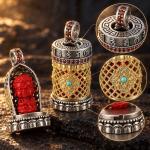
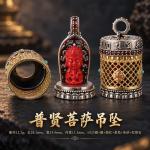
Six options standing side by side: resist the urge to pick the face you recognise. Mahasthamaprapta, Amitabha, Acala, Samantabhadra, Manjushri and Thousand-Armed Guanyin each hold a distinct place in the iconographic system, and a wrong identification shows. You tell them apart by crown type, hand gesture and attribute, not by feel. People bring blurry photographs into the shop and ask which figure is in them; when the image won't resolve, the hands are more reliable than the face. All six gestures differ, and all of them can be checked in a reference album.
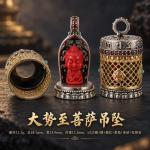
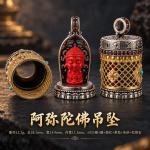
In the Three Sages of the Western Pure Land, Amitabha stands at the centre with Guanyin and Mahasthamaprapta flanking him. Mahasthamaprapta's sign is a treasure vase, usually set on the crown of the head, holding the light of wisdom; Guanyin carries a pure-water vase with a willow sprig in it. Both wear a compassionate expression, and the difference lies in that vase and that sprig. Their crowns differ too: Mahasthamaprapta's holds a vase, Guanyin's holds a small transformed Buddha, which you can only separate at close range. The two are constantly confused, and the crown is the surest guide. The Buddha in the crown is tiny; it needs raking light to be visible at all.
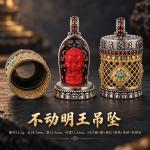
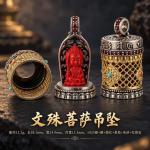
Manjushri rides a blue lion and usually carries a sword and a sutra. The sword cuts through affliction, the sutra stands for wisdom. Samantabhadra rides a six-tusked white elephant and emphasises practice and vow; his posture is steadier than Manjushri's. Acala is a wrathful form, sword in the right hand and noose in the left, fierce in the face but not in the eyes, which is the measure esoteric sculpture keeps. Thousand-Armed Guanyin is the busiest of the six: forty-two hands, each with an implement, and reduced to pendant size most versions indicate only a few of them.
Pressing figures this detailed in S925 silver tests the mould. The face covers too small an area: cut the brows and eyes deep and the expression turns fierce, cut them shallow and everything smears into a blur. Silver is hard enough to hold the folds of a robe, but round off one turning point and the whole figure looks thin. Dust settles in the recesses, so after a while sweep them with a soft brush. Don't blow on the piece; dried breath leaves marks.
Choose a fine chain, because the figure has weight of its own. Worn close to the neck, watch for oxidation: on anyone who sweats freely, the back of the neck darkens, which is normal. For an elder, Amitabha or Guanyin is the safe choice; for a younger wearer, Manjushri and Samantabhadra are easier to explain. Acala is the most recognisable of the six and also the most particular, so satisfy yourself that the person can live with that face before you choose it. A chain that is too long lets the pendant swing out past a collar.