


Menu
By theme
By theme

{{ variable.name }} : {{ variable.values[selectedVariantsIndex[variable_index]].name }}
Quantity:
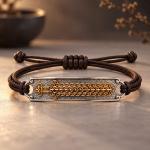
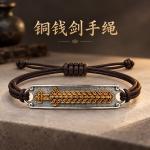
The coin sword is something older generations hung behind doors and at windows. Coins are braided one by one onto red cord into the shape of a sword, point down, and a careful household would add a paper talisman. Its origin lies with charm coins, the sort never meant to circulate but cast to guard a house, ward off ill fortune and carry a good wish. The body is usually made from Qing dynasty reign coins, for the sense of completeness and long continuity, though some people insist on the Five Emperor coins, wanting the five reigns linked in a row. Length follows the door frame: hang it so it doesn't block the way. The Five Emperor set is a fairly recent idea, and what it wants is five reign names strung together.
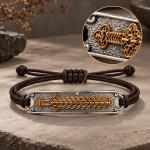
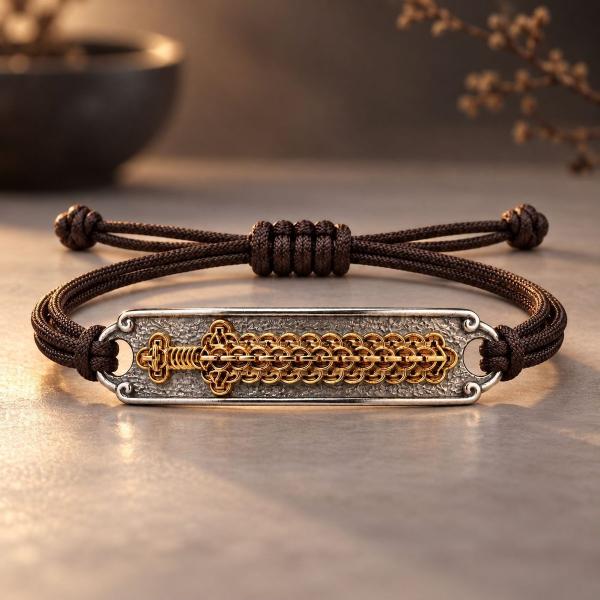
In the braiding, the coins have to be held firm. Leave the knots between them too loose and the body goes soft and sags when hung; too tight and the faces grind against each other and the rims blur quickly. This piece uses S925 silver for the coin shapes, which is lighter than bronze, so the finished sword is less likely to pull itself out of shape. Silver coins are also thinner, stack neatly, and won't bulge into a lump on the door, and a thin leather washer between coins cuts the wear considerably.
The lettering on the coin face is where the work shows. The square hole has to sit true and the characters be clear; shift the lettering and the whole coin looks fake. On an antiqued silver face the characters darken while the field stays pale, which reads more like an old object than a bright new one. The finish is not paint: the silver is allowed to oxidise, so it cannot be wiped off and will not flake. Coin inscriptions are read either in opposed pairs or around the rim, and the wrong order gives the wrong coin. Avoid pieces with shallow lettering; there is no pleasure in wearing them.
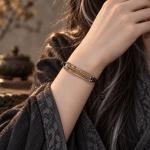
The braid decides how the cord wears. A flat knot is strong but stiff and works loose after a few days; a vajra knot is dense and doesn't slip when you sweat. If your wrist is thin, don't braid it long, or the end will swing against a desk. Take it off for bathing, because water in the core of the cord dries slowly and eventually smells. Cord ends are singed with a flame so they don't unravel, then pressed flat; don't leave a hard bead there. Once the cord starts to fuzz, replace it rather than waiting for it to break. Cotton-waxed cord sits better than nylon.
Objects like this don't belong on a wrist every day. They hang better on a bag, in a car, or by the entrance. As a gift, it depends whether the person takes to this sort of folk flavour: plenty of younger people do, but ask first. The sword has a point, so hang it out of a child's reach, and don't hang it from a rear-view mirror, where it blocks the view.