


Menu
By theme
By theme









{{ variable.name }} : {{ variable.values[selectedVariantsIndex[variable_index]].name }}
Quantity:
Get the order right: choose the fittings first, then the beads. Do it the other way round and you end up with a pile of beads, fittings that will not match them, and a compromise that wastes the money. Electroplated copper is bright, steadies best against dark beads, and looks shallow against pale ones. Pinkish pale beads in particular turn vulgar the moment gold comes near them. I have watched people do it both ways, and the second way always costs more in the end.
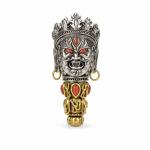
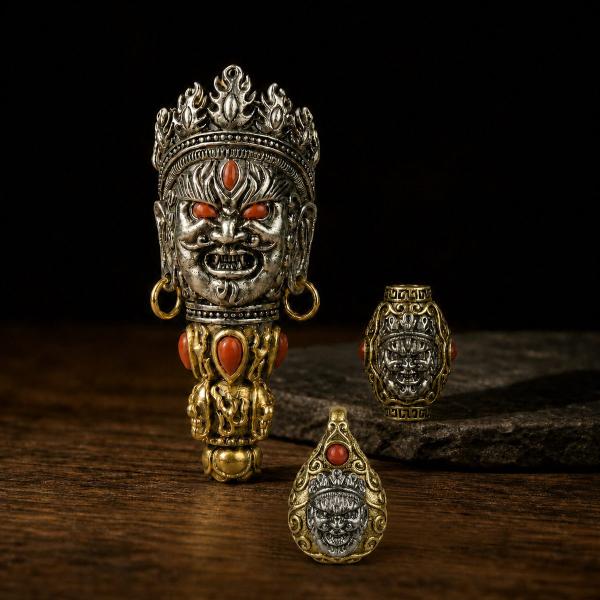
Yellow Jambhala appears in four positions in this range. The waist beads are the pair either side of the mother bead, one size up, doing the dividing; the three-hole bead is where three strands meet and is drilled through in three directions; the counter clips onto the line for counting and can sit almost anywhere, usually beside the mother bead; and the set gathers all of them, so nothing has to be hunted down piece by piece. The same figure sits in every position, the sizes are close, but the holes at the back are completely different. Check which one you are buying.
The counter is not a popular fitting, and the people who use one will not give it up. One turn of the beads, one click of the counter, and after a few rounds you know where you are without spending any attention on counting. Where it clips matters as well. On the right of the mother bead it turns comfortably; clipped too high the beads bunch together and the feel of the strand goes muddy.
In the iconography the jewel in the right hand and the mongoose in the left are the first things lost at small sizes. Plating's shine eats detail, so do not judge the work by the bright areas. Look at the mongoose's tail and the knuckles, the parts that sit down in shadow, and ask whether the edges are still clean. A good cast leaves the tail as a fine line. A poor one leaves a small lump. The jewel often carries a raised band, and if that band is still there the mould is fresh.
Plating wears, there is no way around it. With beads rubbing back and forth, the two ends of the hole show copper first, a reddish tone underneath the gold. That is not a fault, and no plated piece escapes it. You can deburr the inside of the hole to cut the friction. Dry the piece after washing your hands or sweating, because the salt in sweat is hard on plating. Keep perfume away, since alcohol fogs a bright surface. A set comes from a single mould, so the colour matches. Loose pieces come in batches and the gold shifts slightly, which you can see once they are side by side.