


Menu
By theme
By theme


{{ variable.name }} : {{ variable.values[selectedVariantsIndex[variable_index]].name }}
Quantity:
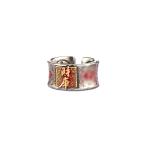
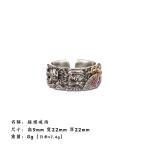
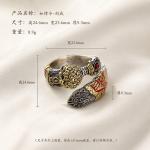
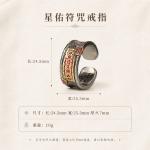
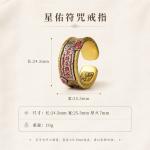
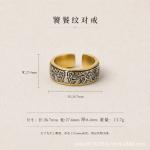
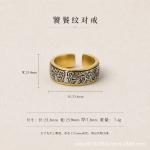
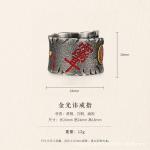
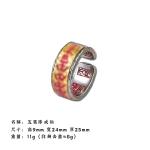
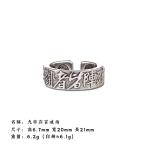
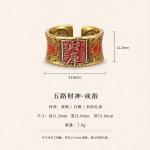
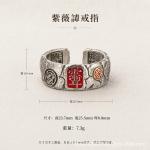
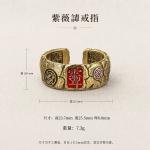
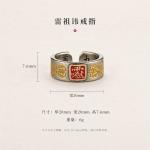
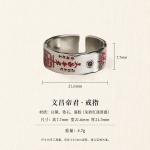
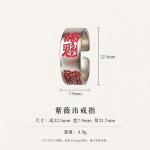
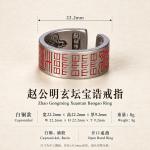
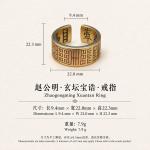
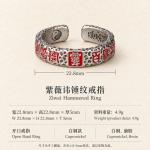
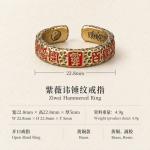
Few people can read the characters on the face of this ring, and many ask about them. A hui character is the secret name of a deity in Daoism, written differently from ordinary characters: strokes are added, dropped or stacked, and it is not read as it looks. The Ziwei hui is one of the well-known ones, usually written by stacking the components for rain, gradual and ear into a single form, and read as Ziwei. Characters of this kind are transmitted inside a lineage, so an outsider sees only a pattern and gets no answer by asking. Each house has its own reading, and uniformity is not required; one stroke wrong changes the meaning.
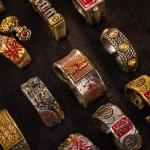
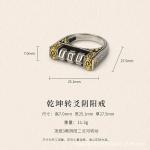
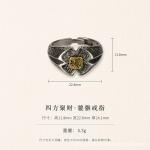
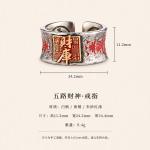
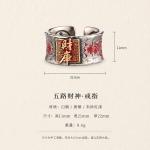
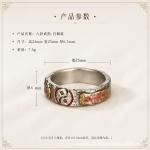
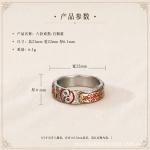
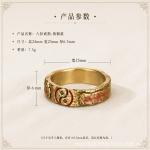
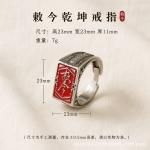
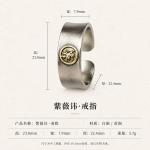
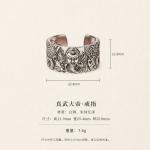
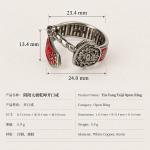
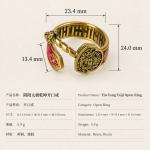
The face sets taiji, bagua and the talisman character together, which is a lot of information. The taiji diagram divides yin and yang, and the bagua has two sequences, Earlier Heaven and Later Heaven; rings usually use the Earlier Heaven order, with Qian in the south and Kun in the north, Li east and Kan west. Get it wrong and anyone who knows the system will spot it at once. The yin-yang fish can be drawn rotating either way, but the two directions must not be mixed on one ring. The trigrams run Qian first, then Dui, then Li; one place out and the whole circuit is muddled.
White copper has a bluish-white base tone, and the engraved lines darken against it with less contrast than silver, which suits an antiqued finish. The lines here are fine, so if the mould has any flash the broken lines of the bagua will bridge, one trigram becomes another, and the meaning is lost. Before buying, turn the ring full circle and check that all eight trigrams are cut cleanly and that no corners have fused. White copper is soft and will take a dent if dropped on tile, and a dent beside the lettering is the most conspicuous place for one.
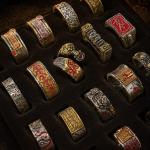
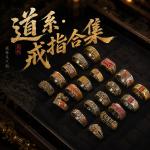
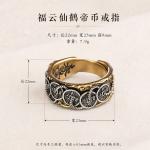
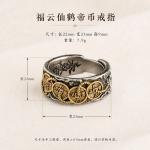
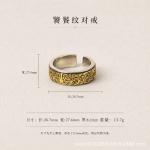
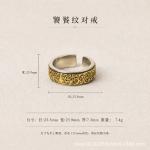
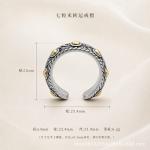
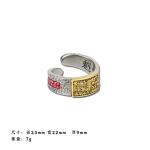
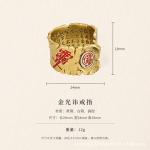
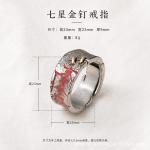
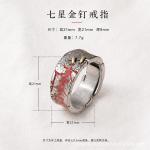
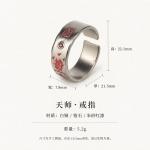
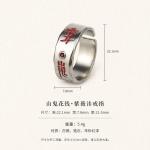
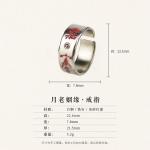
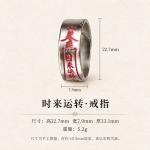
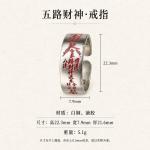
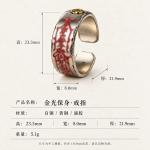
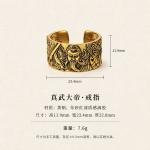
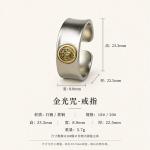
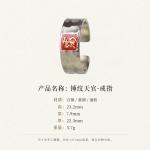
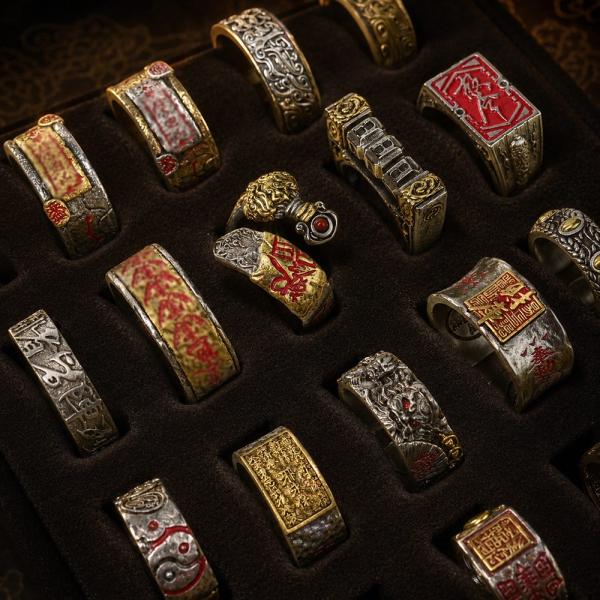
The six styles each have their own use: pixiu for wealth, the Old Man under the Moon for marriage, Golden Light for protection, the Star Blessing talisman, and two Ziwei hui versions that differ only in hammered texture. Choose by purpose, not by pattern, because a handsome pattern does not guarantee the right correspondence. The hammered version has fine dimples across the surface that scatter the light, which makes it quieter than a plain face. A pixiu's mouth should face outward, which is the old rule for wearing one; facing inward it guards only itself. The six styles are not priced alike, so ask before deciding.
An open ring can be adjusted, but white copper fatigues if it is bent repeatedly, so set it once and leave it. On a hand that sweats, a copper band leaves a green mark on the finger. That is verdigris, and washing and drying the skin clears it. It doesn't hurt or itch, but it will transfer to a pale cuff, so wear a different ring on the day you put on a white shirt. Adjust it to fit with a little slack, since fingers swell in summer. The green is not contagious, so don't worry about that.