


Menu
By theme
By theme



{{ variable.name }} : {{ variable.values[selectedVariantsIndex[variable_index]].name }}
Quantity:
Casting a hexagram is, at bottom, a way of taking a question apart into six stages. The six yao are the Yi Jing's own terms: a hexagram is six lines, counted from the bottom, a yang line drawn whole and a yin line drawn as two segments. Each of the sixty-four hexagrams has six lines, and when a line moves the hexagram changes; that moving part is where a reading lands. The notation has been in use for more than two thousand years because it is so spare: a few horizontal strokes hold an entire set of relations. The first line is at the bottom and the top line at the top, so a hexagram is read upward, the opposite of writing. Beginners reverse this constantly. The character yao is pronounced like the word for shake, and takes its sense from movement.
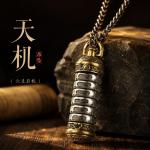
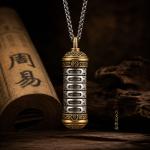
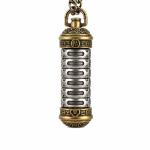
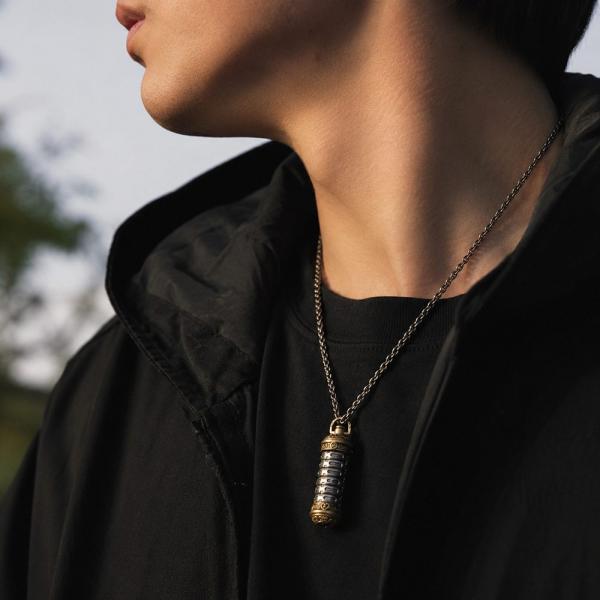
Folk practice casts with three coins, thrown six times, one line per throw. The method is simple, which is why it spread. The pendant engraves the six lines on the front and leaves the back mostly blank, antiqued overall so that it looks like a divining tool that has seen years of use. The order of the lines cannot be scrambled; from the first to the top, a mistake in position gives a different reading altogether. Settling yourself before casting is an old rule. The combination of the three coins fixes yin and yang, and old yang and old yin also require you to look at the changing lines.
White copper takes an antique finish more easily than silver. The oxide layer is thicker and runs from brown to black with a natural transition. On this piece the lines must be straight and even, and the gap in a broken line must not sit off centre, or it becomes another hexagram. Straight lines are the hardest thing to cast, because shrinkage as the metal cools bows them, and the filing work lies exactly there. Spacing between lines should be equal; let it drift and the figure falls apart. The copper's dark tone settles into the recesses, which conveniently provides the shadow side of each line.
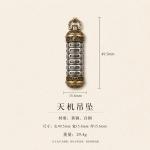
Worn as an ornament, the pattern is abstract: from a distance it reads as a few horizontal bands and does not shout. It works with a plain shirt, with cotton or linen. The pendant is thin, so choose a fine chain; too thick and the piece looks top-heavy. Shorter wearers should take a shorter chain so the pendant rests on the collarbone, which keeps the proportion; too long and the face turns over. The piece is small and the lines are small, so it rewards a close look.
As a gift, start with what the lines mean: where a matter stands, and which way the next step goes. That is a safer subject than fortune-telling and does not overpromise. A friend in business hears change; a student hears advance and retreat; everyone listens differently. Copper dislikes sweat, so wipe it dry before putting it away in summer, and keep silver dip away from an antiqued surface, since it takes the oxide layer off with everything else. Say too much about what it predicts, and nobody believes any of it.