


Menu
By theme
By theme


{{ variable.name }} : {{ variable.values[selectedVariantsIndex[variable_index]].name }}
Quantity:
Seven grains of rice is an old idea. In the past a small bag hung on a child held seven grains, for the wish that the five grains never run short and for the auspiciousness of the number. Explanations differ from place to place: some say the seven stand for the Northern Dipper, others that any odd number would do. The count is not fixed either, with five, seven and nine all in use; seven is the commonest, and the grains should be plump, never shrivelled, which was an old person's rule. The little bag was usually sewn from red cloth and drawn shut at the mouth with a cord. When the cloth wore out, the rice was renewed.
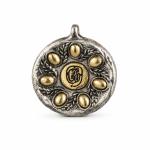
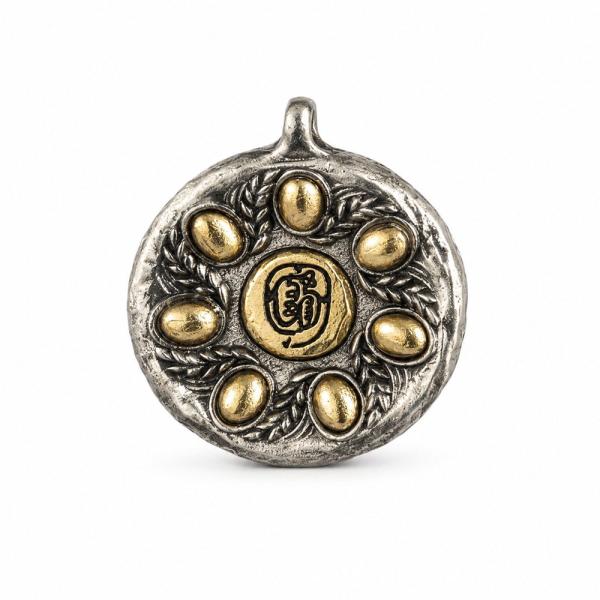
This piece gathers the seven grains into the head of a ruyi. The ruyi is generally thought to have begun as a back-scratcher and later became an ornament, its head shaped like a lingzhi fungus or a cloud, held in the hand to turn over. The charm takes the head and omits the shaft, leaving a hooked outline. With the shaft gone the weight sits at the top, so it hangs true, and hanging head-down is the usual orientation. The hole is drilled at the top of the head.
Making small pieces in white copper, the grains have to be plump. Seven pressed together need grooves between them, and shallow grooves turn the group into a biscuit. This one varies the height of the grains, so light falling on it gives a granular texture. The middle grain is a little larger, with six around it, and the points should all face the same way, because a fingertip finds a random arrangement unpleasant. Seven grains held close together cast as one piece and don't scatter; spread them too widely and the thing loses its cohesion.
There are three options: a sandalwood cord with an auspicious-cloud knot, the charm alone, or on a necklace. The sandalwood cord is dark and contrasts with the cold white of the copper; the necklace is more everyday and unobtrusive with a shirt. The cord adjusts in length, so it fits most necks, and cord and chain can be swapped because the hole is generous. A sandalwood cord has a scent that fades with time without affecting use. It dislikes water, so push it up the wrist when washing your hands. The necklace clasp should be small, since a large one presses on the throat.
The hole has to pass the cord easily. A small hole with a thick cord is hard to thread and wears the cord through, and a rounded hole edge does the cord no damage. White copper doesn't mind water, but cord does, so shake it dry after washing your hands rather than letting it soak. A sandalwood cord goes pale when wet, so keep it away from water, and red cloth cords bleed, so don't wash them. White copper oxidises slowly; a winter's wear only darkens it. Don't crush it when you put it away.