


Menu
By theme
By theme

{{ variable.name }} : {{ variable.values[selectedVariantsIndex[variable_index]].name }}
Quantity:
Zhong Kui’s origin is recorded in Shen Kuo’s Brush Talks from Dream Brook, a Song dynasty notebook. The story goes that Emperor Xuanzong of Tang, ill, dreamed of a small demon making trouble and then of a large one who caught the small demon and ate it. Asked who he was, the big figure answered that he was Zhong Kui, a candidate from Mount Zhongnan who had failed the examinations and dashed himself against the palace steps. The emperor woke cured and had Wu Daozi paint the figure. Whether any of it happened cannot be settled now, but the tradition of painting Zhong Kui does run unbroken from the Tang, and Wu Daozi’s brush gets invoked every time the subject comes up.
In ordinary households the image goes up at two points in the year: the Dragon Boat Festival and the end of the year. At midsummer it is hung to drive off the five poisons; at the turn of the year it is hung to meet the new one. One is summer, one is winter, and both are moments when the season turns. The picture goes on the door or in the main room. A small piece worn on the body is a different matter: it carries no ritual, and works more as the sense that something formidable is standing nearby. Whether that does any good is hard to say, but plenty of people wear one and feel steadier for it.
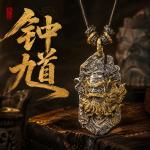
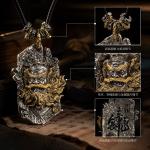
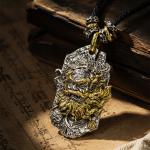
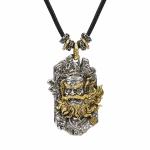
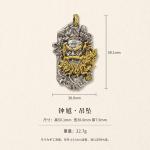
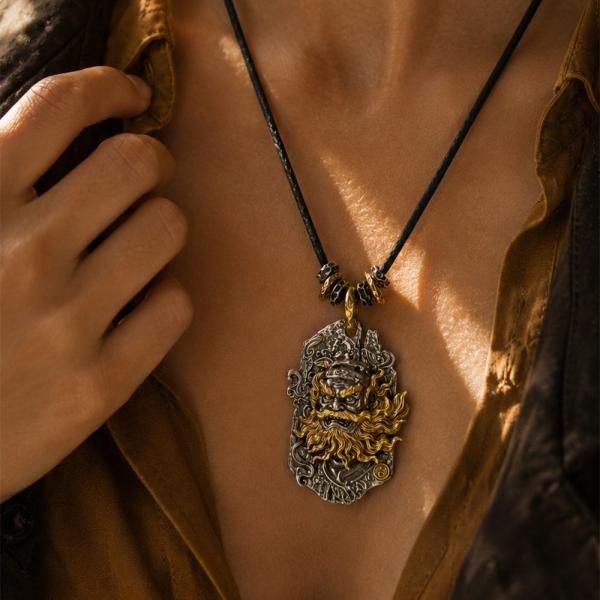
The black Zhong Kui is one strand of the figure’s iconography. The face is darkened, the brows and eyes pressed heavier, the beard bursting outward — fiercer than the red-robed version most people know. This pendant takes him standing, head large and body short, the proportion deliberately exaggerated so the expression survives at a small size. On blackened white copper the hollows go darker while the cheekbones and brow ridges come up bright, and the face acquires relief. The hat wings and the hem of the robe are where the detail is spent; done finely, they carry the profile.
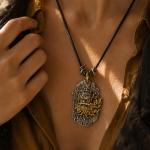
Pendant and necklace are the same piece; what changes is the fitting. The necklace comes on a comparatively fine chain, so the pendant turns on the chest and both faces get seen. The single pendant suits a thicker cord of your own, something with enough weight to hold it steady. The hole sits behind the top of the head and the mass hangs low, so it stays upright instead of listing to one side. The mouth of the hole has been chamfered, which slows wear on the cord — the most practical detail on the piece, over years.
Blackened copper is the last thing you want to scrub. That darkness is a finish, easy to take off and hard to put back. A dry cloth pressed over it, taking sweat and dust with it, is enough day to day. If it truly looks dull, a trace of polishing paste on the forehead and shoulders only, keeping clear of the hollows. Cleaned that way, the piece keeps its light and shade instead of flattening into a sheet of copper. Keep it somewhere dry and do not seal it in plastic; trapped moisture brings out green spots.