


Menu
By theme
By theme



{{ variable.name }} : {{ variable.values[selectedVariantsIndex[variable_index]].name }}
Quantity:
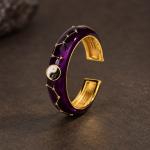
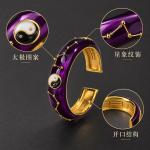
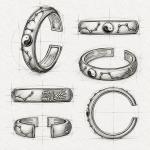
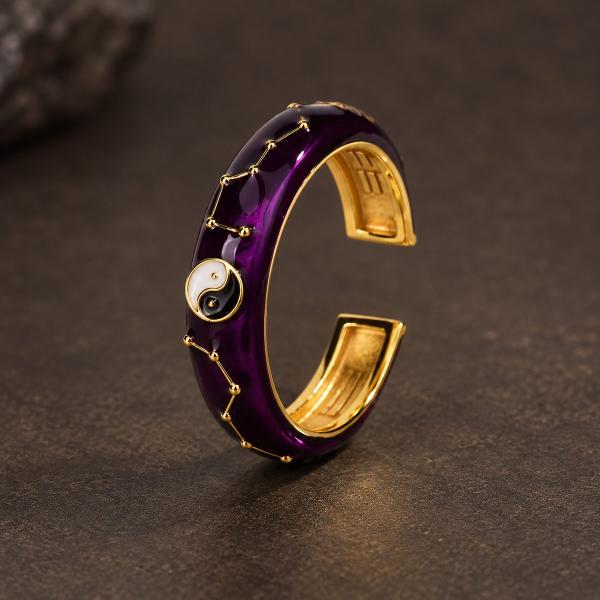
An open ring is a simple structure: a band of metal with a gap left in it, gripping the finger by the spring of the material itself. The advantage is that sizing has some slack, half a size either way will still go on. The disadvantage is that the gap is the weakest point on the ring. Bend it repeatedly, each time to the limit, and the metal fatigues — hairline cracks first, then a break along one of them. The correct use is to put it on and leave it alone, adjusting only a fraction when you move it to another finger.
Brass has a warm yellow, and the cut ends show at the gap. Left unfinished, those edges behave like small blades. Done properly, both ends are rounded over and polished, and a finger passes across them smoothly. Before buying, run a fingertip around the gap; a burr means it was not cleaned up. This is not fussiness — an open ring rubs the space between fingers all day, and a burr will wear the skin red. The width of the gap matters too: too narrow and it will not go on, too wide and it will not hold, and whoever makes it has to find the balance.
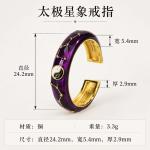
With an open ring, the gap is best turned toward the side of the finger rather than the palm. The palm takes the pressure, and a gap under compression distorts. Position matters as well: the index finger is conspicuous, the middle steadiest, the ring finger for everyday, the little finger better with a narrower band. This one comes in a single size, so there is no choosing; if your fingers are especially slim or heavy, check first that the adjustable range will cover you.
The astronomy here was practical for the people who used it. One full turn of the handle of the Big Dipper is one year: handle pointing east and it is spring everywhere under heaven; south, summer; west, autumn; north, winter. The line is recorded in the He Guanzi, the observation-and-calendar experience of pre-Qin times. Engraved on a ring, it carries the sense of time turning, which is not the same thing as divination.
Brass darkens at the touch of sweat, and the inside of the gap discolours first because air does not move there. To bring it back, use brass polish or toothpaste on a soft cloth, working in circles along the band, not across it — crosswise strokes will ruin the brushed grain. Rinse and dry afterwards; a little water left in the gap becomes a green patch within days. Do not leave it on a windowsill when you take it off; sunlight will blotch the colour unevenly.