


Menu
By theme
By theme

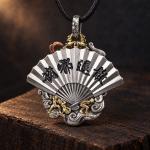

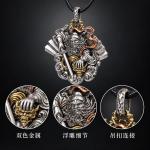
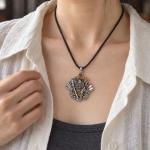
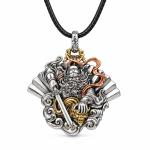
{{ variable.name }} : {{ variable.values[selectedVariantsIndex[variable_index]].name }}
Quantity:
In paintings of Zhong Kui seizing a demon, the interest is in the two hands. One grips the demon by the collar or the topknot; the other raises a sword, or holds a fan. The pose needs the sense of lifting — the demon’s toes off the ground — and then the picture comes alive. That pose has passed through New Year prints for centuries, block cutters revising it generation after generation, until the version with the fewest strokes and the most spirit became the fixed one.
The demon is drawn small on purpose. Small, hunched, blue-faced, barefoot, set against Zhong Kui’s bulk. Once the scale separates them, nobody has to explain who is stronger. On a pendant this ratio is the hardest thing to keep: the plaque is only so wide, Zhong Kui has to take seventy percent of it, and the demon squeezed into a corner still has to read as a human figure at a glance. Shrink it too far and it becomes a lump.
Pendant and necklace are the same subject with different fittings. The theme itself carries weight, so the pendant is not made small, and a fine chain will make it look top-heavy; the necklace version uses a slightly heavier chain, which holds. If you fit your own cord, a dark one works better than a pale one. Red is possible too, if you want that bit of noise around the neck.
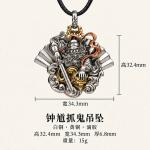
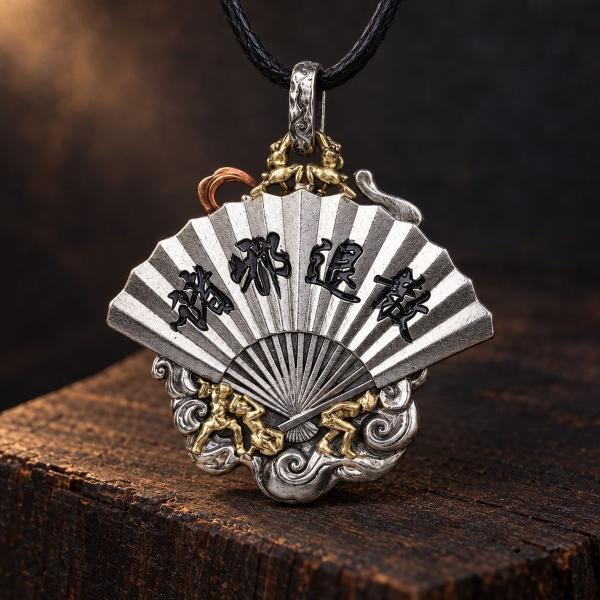
This one is antiqued white copper. The method is not to dye the whole piece black but to leave dark in the hollows and light on the raised surfaces; once the values separate, the figure stands up. To judge whether it was done right, look at the beard: if every hair is the same depth, it came out of a machine mould. Good antiquing runs deep at the root of each hair and light at the tip, following a direction. The folds of the robe work the same way, dark in the creases, bright where they turn. A flat back sits against the chest without digging in; a patterned back is a matter of individual taste.
On an antiqued piece the dark in the hollows is the finish, not dirt. People take a toothbrush and toothpaste to it, and afterwards the figure is flat and the features are gone. The right method is a dry cloth pressed over the surface, with a soft brush used dry in the seams. If you truly want it brighter, a trace of brass polish on the forehead, the shoulders, the spine of the sword — the raised parts — and around the hollows. Rinse and dry, because water left in a seam brings out green, especially in fine seams like the roots of the beard. Cleaned this way the piece keeps its original light and shade.