


Menu
By theme
By theme







{{ variable.name }} : {{ variable.values[selectedVariantsIndex[variable_index]].name }}
Quantity:
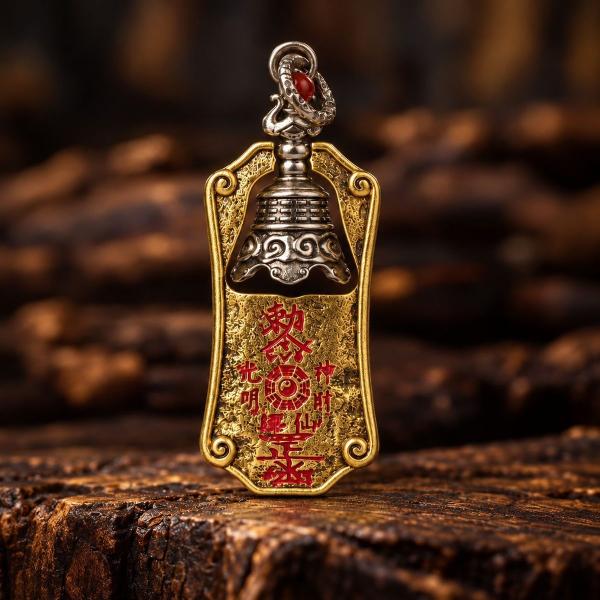
In Daoist ritual the bell is an important instrument. The common form is the Three Pure Ones bell, also called the emperor’s bell: a three-pronged handle standing for the Three Pure Ones, a covered body, an open mouth below. It is shaken in rhythm, fast or slow following the footwork, to govern movement through the ceremony. It does not rely on volume. It relies on that one clear ring — once the sound scatters, the room scatters with it.
The sound depends on two things: the gap between clapper and wall, and the thickness of the body. Too wide a gap and the note spreads; too narrow and it deadens. A small bell worn on the body rings faintly as you walk. Some people like the sound, some find it irritating — hang it on a bag, or wear it close to the body, and it quietens a great deal. The clapper is a loose piece and wears with shaking; one day it stops ringing, and a new one solves that. Others, wanting silence, take the clapper out and keep an empty bell: the shape remains, the sound does not.
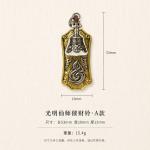
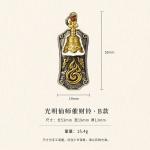
Gold and silver versions have different characters. Silver is cool and closer to what a ritual instrument looks like; gold is warm and reads more as an ornament. Single bell or with a necklace are two ways to buy. The first can take a cord of your own, or hang from a chain you already own. The necklace version comes on a fine chain, and the bell sits below the collarbone where you can see it when you look down. The body is open and the cord passes through the ring on the handle; a small split ring at that point will slow the wear.
The “immortal master” in the name is a folk honorific for a Daoist cultivator, not a specific figure. Usage varies by region: sometimes it means a founding patriarch, sometimes a local priest who received offerings. This bell takes the title rather than a particular deity, which is why there is no face on it, only the bell. That is the safer choice — with no face to recognise, there is no face to get wrong.
Dust collects inside the bell, and once there is enough of it the note goes dull. Do not rinse it: water goes in and does not come out, and the inner wall goes black. Turn it over and tap it twice to shake the dust loose, then run a cotton bud around the inside. The outside gets a dry cloth, never a wet wipe. Store it on its own — the wall is thin, and anything hard pressed against it leaves a dent. Both versions scratch, so keep them apart if you own both.