


Menu
By theme
By theme



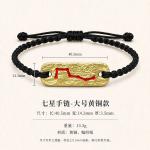
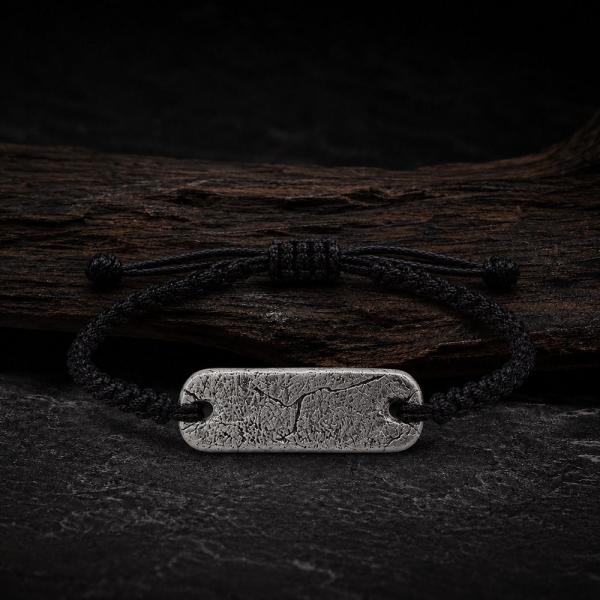
{{ variable.name }} : {{ variable.values[selectedVariantsIndex[variable_index]].name }}
Quantity:
Mixed material work means stringing things of different weight and different sheen on one line. Heavy beads, light spacers; one material matte, another reflective. Side by side, each one’s weaknesses are covered by the other’s strengths, and the bracelet gains depth. The spacer does real work here: it separates two main beads, keeps them from knocking, and gives the colour somewhere to travel. Whether the mix works comes down to whether the passage between neighbouring beads is smooth. Get that right and the eye runs the whole strand without stopping; get it wrong and it jolts at every joint. Colours that jump too hard break the whole strand into pieces.
Seven is a good number to arrange on a bracelet. Going around the wrist, put a spacer every seventh bead, or change colour every seven, and the rhythm appears. Long strands in this tradition run to a hundred and eight beads; a bracelet is shorter, a dozen or two, one turn of the wrist. Number conventions differ by region, and most makers start from the wrist measurement, settle the loop length, and work out everything else after.
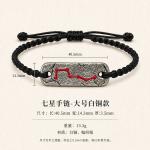
Two colour families, yellow and white; two sizes, large and small. Yellow is warm and shows against dark clothing; white is clean and feels fresh in summer. Size means both loop length and bead diameter. A small wrist in a large size and the beads rotate around it, which is worse than uncomfortable; a large wrist in a small size and it binds. The practical way to measure is a soft tape around the wrist just behind the wrist bone, not over a sleeve.
A bracelet worn while working will get knocked; that is unavoidable. Beads grind against each other, and over time the contact points go frosted — every strung piece does this. Take it off for heavy work and lifting and you avoid a lot of damage. Cycling or carrying something heavy multiplies the pressure between beads several times over. Do not wear it too loose; a loose bracelet flies off when you swing your arm. Not too tight either — tight restricts circulation, most obviously in summer.
Mixed materials cannot be maintained with one blanket rule. What fears water should not be soaked; what fears dryness should not be heated; metal gets a dry cloth pressed on it, beads get a soft cloth. Store the whole thing flat in a box rather than hanging it on a nail — a strand carries its own weight, and over time the cord slackens and the loop grows. When you notice the cord going slack, restring it early rather than wait for a break and pick the beads up off the floor. Each part ages at its own rate, and the attention you give it should follow.