


Menu
By theme
By theme

{{ variable.name }} : {{ variable.values[selectedVariantsIndex[variable_index]].name }}
Quantity:
The nine-tailed fox was not always a demon. In pre-Qin and Han records it is an auspicious omen. The Classic of Mountains and Seas, in its Southern Mountains chapter, describes a beast on Mount Qingqiu shaped like a fox with nine tails, its voice like a baby's, and able to eat people. Omen and menace sit side by side in that same passage; the ancients did not sort their records into tidy categories. On Han pictorial stones the creature crouches beside the Queen Mother of the West, ranked with the three-legged crow and the toad. Its status there is numinous beast, not spirit of mischief.
The fox's reputation soured later. Six Dynasties tales of the strange began writing it as a woman who could change form, Tang romances piled on embellishment, and by the Song the nine-tailed fox was practically a byword for disaster. The same beast was treated differently in different dynasties, and anyone reading the sources has to watch the date. The commonest mistake is to confuse the Han omen with the Ming and Qing demon. Song notebooks cursed it fiercely and stage plays followed, and that is how the reputation set.
Folk practice has another name for it: the Fox Immortal Lady. In the north, households used to keep tablets addressed to Hu xian, grouped with Huang, Bai and Liu. Images in this line are mostly female, neatly dressed, hands folded, and they are not made the same way as the omen-beast nine-tailed fox. The lady image is for worship and the beast form is for wearing; the uses are kept apart. Tablet inscriptions vary by region, some writing Hu xian and some only Niangniang. The pendant takes the latter, though it brings the female form in as well.
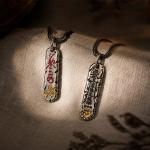
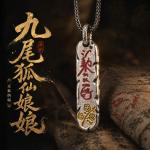
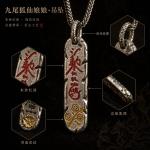
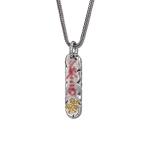
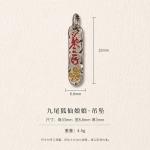
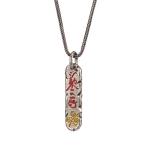
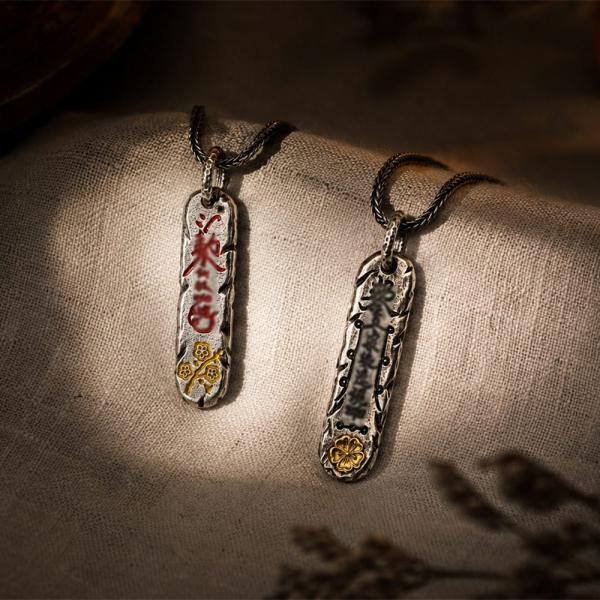
This piece is the lady form. The face is the hardest part: brows and eyes drawn in, lips reduced to a single line. Cut too deep and she looks fierce. Nine tails spread behind her, the tips curled, with hollows left between them; a solid plate would feel stifling. The cold white of copper can carry this density, where a warm metal would turn vulgar. The robes are cut with a shallow blade, layer over layer, so that light gives depth without any colour.
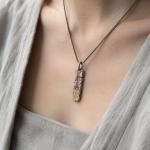
The necklace version saves trouble, while the single pendant is for people who have already matched a cord. When sweat gets on the copper, rinse it at home with clean water, blot it dry, and clear the dust from the crevices with a toothpick wrapped in a little cotton. Keep silver dip away from it; that stuff is unkind to the colour. Worn long enough, the colour sinks and the face reads more clearly, a change most visible on low relief. Pick a chain with a solid clasp, since the pendant has weight and a fine clasp is not reassuring.